
.avif)
Our 12 Best Writing Tips From 2025
.avif)






It’s been quite a year at The Novelry. This year brought fascinating stories and incredible moments with our beloved writing community. As we bring in 2026, we’re taking a moment to highlight some of the glorious writing advice we’ve published on our blog that will help speed you into your writing this year.
So, put your feet up (you’ve earned a break!), and take a moment to revisit some of our favorites. You might discover some new tools for your writing toolkit as you get ready to welcome a new chapter of your writing life.

1. The morning routine for writers
At The Novelry, we believe that scheduling time for yourself, just an hour a day, is key to creating a successful writing practice. But even an hour can be hard to find in our incredibly busy lives, which is why we are big fans of writing in the morning, before you have to tackle all the other stuff that needs your attention.
From getting your desk ready the night before to making sure you move your body to clear the cobwebs before you begin, our writing coaches had a ton of great ideas to offer on making the most of the early hours, all gathered together in this helpful article. Whether you’re at home, a cafe, or the library, creating a routine is important.
I try to finish the last day mid-sentence or at the beginning of a “good bit” that I have pre-worked out in my head and can jump straight in. I use Spotify playlists to get into the zone, plus coffee. Mornings are best, and if I get 500–1,000 words done before lunch somehow, however rubbish, that feels like a win... Then maybe some revision or finishing off between 5 and 6pm. If I have to make up lost time or meet a deadline, I put Netflix on in the corner of my screen, something fun and moreish, nothing super intense, and con my brain into thinking I am, in fact, having fun and not working manically.
—Piers Torday
The idea is to find what’s most helpful to you, and the best way to do that is to experiment with your morning routine and then be open to trying other things if needed.
2. Shiny new idea syndrome: how to choose what to write
As number one bestselling author Clare Mackintosh says in this great blog, new stories are exciting. They arrive without baggage, promising fun, full of endless possibilities. And if we’re stuck on our WIP, they can be really attractive.
But if we spend all our time chasing new ideas, we might end up with a stack of unfinished books. To tackle this, Clare recommends thoroughly vetting your new idea and then seeing if it gives you “The Tingle.” Every writer experiences this in a different way. It’s that feeling in your gut—a gleeful grin when you think about a twisty turn, an inner glow because you just know you’ve found the idea you want to spend time with.
For writing coach Emylia Hall, there’s always a “heat” around a winning story idea.
It’s hard to describe, but the idea feels fully formed, almost like a book I’m already reading or a TV show I’m already watching. And it feels like I’m going toward the idea rather than the idea coming to me.
—Emylia Hall
The important thing to remember? Once you’ve picked your idea, commit to it. You’ll be tempted to stray, but stay with it. Write to the end. It won’t always be easy, but that doesn’t mean your idea isn’t a winner. Sometimes we just have to write our way through the prickly sections.
3. What exactly is a novel?
It might seem like a silly question, but it’s one that doesn’t often get asked. Acclaimed YA and fantasy author Ella McLeod answers this beautifully when discussing the journey from story to novel in this explanatory blog.
If the story is the lifeblood, then I imagine the novel is the body. The plot is the heart, pumping the story around the body—the novel—to the limbs, which are the characters (stay with me), the active output of all that life force... That makes us writers the brain! We are the energetic, eclectic center of all the goings-on, making decisions and asking questions.
—Ella McLeod
Writing coach Katie Khan also had this important insight to offer when thinking about how a novel can be so many things to different people:
Being an avid reader of novels as a child and young adult took me to other cultures, countries, and places and allowed me—temporarily—to live other lives. Thanks to Judy Blume, Sweet Valley High, and Paula Danziger, I grew up fascinated by American high school (what is a freshman, a Camaro, a den?); I read books about children dealing with grief, absent parents, and time travel; I learned about Native American traditions, Celtic mythology, and the Second World War. Now, as an adult in my early forties, I am frequently fascinated by how much of my wider (and sometimes random) knowledge pool comes from a fictional book I read at some point in my life.
What is a novel? A portal, perhaps, to another life, but also a vehicle for gaining and learning empathy.
This is why representation in publishing is so important: for young readers to walk in the shoes of cultures outside of their own and beyond the predominantly white countries, characters, and families explored in children’s books during the eighties and nineties. A novel can take you anywhere. Isn’t that beautiful?
—Katie Khan
Where is your novel taking you and your reader? Rest assured, if you have a story you are bursting to tell that explores gripping themes and characters you are keen to know, you’re writing a novel.

4. What is literary fiction—and are you writing it?
At the heart of literary fiction is the human experience and all it entails, so there’s no need to be intimidated by it—because it truly is for every reader. But is it for every writer? And how do you know if you’re writing it? To explore this question, we consulted one of our brilliant editors, Sadé Omeje, for her insights in this incisive article.
When compared with commercial fiction, say, [literary fiction is] often more poetic, explorative, experimental, and layered with meaning and intention. I see it as an exploratory “drilling” into language and its boundaries, where writers might stretch, reinvent, or cause readers to reconsider language and meaning in new and exciting ways.
—Sadé Omeje
Still not sure if you’re writing literary fiction? Use Sadé’s handy checklist to find out.
Does your novel have:
- A unique character? ✅
- A rich idea? ✅
- A strong voice? ✅
- An interesting theme? ✅
- A fresh or experimental style or structure? ✅
Then you’re probably writing literary fiction. But if your novel fits these criteria:
- Plot-driven stories centered on solving crimes or murder mysteries ❌
- A fast-paced thriller or horror story, with frightening, gory, or violent elements ❌
- Stories that follow specific romance “beats” ❌
- Zeitgeist or potentially taboo topics that make room for lots of discussion and debate ❌
- Young adult themes with the Young Adult market in mind ❌
...then you’re probably writing in a different genre. Most importantly, you must write what you love and tell the story only you can tell.
5. How do we define a fictional character?
In this essential craft article, author and writing coach Alice Kuipers explores why we connect with and empathize with the people (and other creatures) in the stories we love.
Stories are exercises in empathy. Made-up stories give us ways to see how other people or even other beings might live. This helps us learn to empathize by deepening our connections to others, even when those others are invented. When we fall in love with or have other strong feelings about characters in novels, we’re moved and changed by that reading experience, just as writing about those characters moves and changes us as writers.
—Alice Kuipers
It stands to reason that if we want our readers to feel deeply about our characters and their lives, we need to make them feel real on the page—and interviewing your character is a great way to do that.
Here are some questions you could ask your character:
- What is their date of birth and star sign?
- What’s their employment and, more specifically, their income? (Important in real life but overlooked in novels. Why? It’s a main feature of life for most real people. This could be a major problem for your character. Is it?)
- How do they sleep? In what position? Are they a good sleeper? What do they do before turning in for the night? How do they get to sleep?
- What is their secret fear or dread?
- What are they ashamed of having done or not done in the past?
- If given $10,000 or a large amount of disposable cash, what would they do with it?
Once you know these things and more, you can rest assured that you’ve started creating an unforgettable fictional character.
6. How to write an interior monologue
Now that you have your protagonist, how do you show their feelings to the reader?
An interior monologue is a wonderful way to present your protagonist’s inner thoughts and develop the connection to the reader. In this fantastic deep dive, writing coach Ella McLeod shares these five ways to use an interior monologue, along with multiple tips and tricks, and examples from great novels.
- Epistolary
- Stream of consciousness
- Dialogue
- Show, don’t tell
- Inner voice and perspective
As always, be playful! Talk to yourself, talk to others, talk in your character’s voice. How do they talk to themselves? It’s not crazy, it’s creative! Try writing in different forms and other types of voice, as if you’re out shopping and trying on shoes. Stories live in souls, and outlast even the hardiest soles.
—Ella McLeod
{{blog-banner-9="/blog-banners"}}
7. Using the Flow State to write your book
Did you know that there is a psychological state, a state of being, known as “Flow”? In this thoughtful exploration, writing coach and Flow expert Alice Kuipers explains that Flow allows us to “focus deeply, write more quickly, see connections in our story more easily, and perform at our best capacity.”
Being in Flow (or in the zone, as athletes call it) is something we can all learn to help us with our writing.
In the state of flow, your brain experiences a surge of the neurochemicals dopamine and norepinephrine. These help us enter deep focus, discovering new connections and ideas, and experiencing more powerful cognitive processing, attention, and enjoyment.
As writers, we need to access this flow state over and over again to write an entire manuscript. Coming to the page consistently helps our brains recognize and seek the neurochemicals that flow releases. This makes us want to write more because we seek the dopamine and norepinephrine produced in the flow state.
—Alice Kuipers
Tempted to try it for yourself? Here are eight essential characteristics of this ideal writing state:
- Complete concentration on the task
- Clarity of goals and reward in mind, and immediate feedback
- Transformation of time (speeding up/slowing down)
- Effortlessness and ease
- A balance between challenge and skills
- Actions and awareness are merged, losing self-conscious rumination
- A feeling of control over the task
- The experience is intrinsically rewarding
At The Novelry, we want you to be able to get into Flow easily and often, enhancing your creativity to help you write your novel or memoir. Flow doesn’t happen every day without some work, but it is possible! Dive into Alice’s wise article to learn more.
.avif)
8. What are the 25 best YA books of all time?
At The Novelry, we take YA fiction seriously for both writers and readers. These are stories of longing and belonging, the trials of growing up and being misunderstood, the familial challenges that come with emerging independence, and the unfair burden placed on the young who inherit a world not of their making.
YA novels will, of course, always be for teenagers; they are often credited with helping young people to explore not just the life they have, but the life they may dream about—and yet the adult readership of this genre is expanding, as we will see.
—Ella McLeod
The Young Adult genre has produced some of the biggest and most celebrated franchises of all time. Series like The Hunger Games, The Twilight Saga, and Divergent have not only dominated the YA genre but also captured the attention and adulation of all kinds of readers, topping lists and eventually box-office charts.
So, what makes books aimed at 14- to 18-year-olds transcend genre and capture the attention of adults, too? This blog, listing 25 of the best YA novels, breaks it all down.
If you’re thinking about writing in the YA sphere and you want a primer on the best and brightest stories on the shelves, check out the article—and get that library card ready!
9. Chris Whitaker on writing All the Colors of the Dark
Just one of our many special guests this year, author Chris Whitaker knows a thing or two about transcending genres and topping the charts.
Chris is the New York Times bestselling author of five published novels (Tall Oaks, All the Wicked Girls, We Begin At the End, The Forevers, and All the Colors of the Dark), the plots of which include elements of crime thrillers, coming-of-age journeys, tales of drama and tragedy, epic love stories, and even a good old murder mystery. All the Colors of the Dark, his most recent novel, stormed the bookshelves and the bestseller lists in 2024, winning multiple book club picks and award nominations—and a television rights deal.
So, how does Chris do it? He joined our writers here at The Novelry for a special masterclass earlier in the year, and this is just a brief snippet of what we learned from him—five key pieces of advice for every writer at every stage of the writing process.
- Research: know everything your character can see, hear, and feel
- Overwrite massively, cut brutally
- Meet your characters on the page
- Write the scenes you feel like writing—then put them together
- If you’re dreading writing your manuscript, ask yourself why
Read the article in full for great advice and insights from a terrific writer who isn’t afraid to take risks, do the work, and write the book he wants to read.
10. A literary agent Q&A with Erin Harris
At The Novelry, we love hearing from inspiring authors like Chris Whitaker, who so generously share their expert advice with our writers. But what about the steps after the novel is written—when your novel is ready to submit to agents? For many writers, it’s a mysterious process they feel they know little about.
We were excited to have Erin Harris, Senior Vice President of Folio Literary Management, lead a live writing class for our members in 2025. Erin generously offered her take on the shifting landscape of publishing, the art of agenting, and what it really takes to capture an agent’s attention.
Here’s just one (maybe two) of her top tips for authors who are getting ready to query literary agents:
My number-one top tip for writers who are preparing to query is to carefully research the agents to whom they intend to submit and only submit work to agents they believe would be good partners.
My second tip (I couldn’t limit myself to one) is that writers should only query widely once they feel their manuscript is ready for prime time.
—Erin Harris
We couldn’t agree more. We work with our writers to make sure their manuscripts are as ready as can be before going out into the world. We know you only get one chance to make a first impression, but you get as many as you need to get your story right before it lands on the desk of an agent like Erin.
So, take your time, and be sure to read the full article for more of Erin’s professional insights.
.avif)
11. The Next Big Story
Writing the story only you can tell and dreaming big was exactly what The Next Big Story was all about. We invited writers from all over the world to believe in themselves and enter the opening three pages of a novel for their chance to win $100,000. Our mission was to find a new voice in fiction and kickstart the career of a writer who might otherwise never dared to put pen to paper—and we were overwhelmed by the response, because 22,500 of you entered.
Writing fiction is a stay against normal life. For just a little while, we enter the land of imagination and lose our adult selves, letting go of the routine of drudgery and duty. It’s therapeutic to forget our troubles for an hour or so.
—Louise Dean
To help entrants get into the mindset for writing their entries, our founder, Louise Dean, offered some wise tips on how to write a good story without worrying about being a good writer.
Don’t wait for ideas to come to you. Go out and about with a net. Do things differently. An author has a faculty for making use of whatever presents itself. Go to the supermarket, get on a train, eavesdrop, and consider strangers in new ways. Ask yourself questions about these people.
—Louise Dean
Put us in this world and make us feel you are a safe pair of hands. Establish the world, the eyes, the outlook, the voice. Simply show us what you see. Again, don’t try too hard. Bring us safely and credibly to another place and make us feel at home in the first pages.
—Louise Dean
The team at The Novelry worked around the clock to select a longlist and a shortlist before our panel of esteemed judges, chaired by Women’s Prize for Fiction winner Tayari Jones and guided by a public vote, chose the winner from our outstanding final eight.
What a thrill it was to read everyone’s entries. We were delighted to see that the desire to tell stories is alive and well, and it’s easy to understand why. Which brings us to the last of our special moments from 2025—the announcement of the winner of The Next Big Story...
12. The winner of The Next Big Story
The Next Big Story shortlist was full of surprises, spanning a multitude of genres, including fantasy, crime, historical, contemporary fiction, dystopia, speculative, and suspense. These pages had us on the edge of our seats, desperate to read more.
Choosing a winner wasn’t easy, nor was it taken lightly. In the wise words of Tayari Jones, judging chair:
This is a very serious responsibility we have here in front of us. We’re going to change someone’s life. We’re going to put a worthy writer on the path to being an author. Every single one of the entries—all 22,500—are, in fact, a writer. But we are about to help someone become an author.
—Tayari Jones
The worthy winner of our inaugural The Next Big Story contest was Stella Donovan, and you can read her winning entry here.
I encourage anyone who has a story that won’t let them go to keep writing, take a big swing, and bet on yourself. As I’ve learned over the last few weeks, everything is possible.
—Stella Donovan
And what a great reminder to us all. Dare to dream, writers! The next winner could be you.
.avif)
At The Novelry, we really do believe that anything is possible. We’ve seen how the seed of a great idea can be planted into fertile ground by creative minds like yours, nurtured by our wise and wonderful writing coaches, and shaped and pruned by our brilliant editors. With the incredible ideas, hard work, and admirable dedication of our terrific writers, we see these ideas bloom into novels that we can’t wait to see on bookstore shelves.
Every writer starts somewhere. Hopefully, these 12 insightful blogs will inspire you to take the next step in your writing journey. And when you’re ready, The Novelry is here to welcome you with open arms.
.avif)
.avif)


Gina Sorell
Writing Coach
New York Times Book Review Editor’s Choice and acclaimed contemporary fiction author of The Wise Women, a People Magazine Best New Book Pick.
.avif)
Related Articles
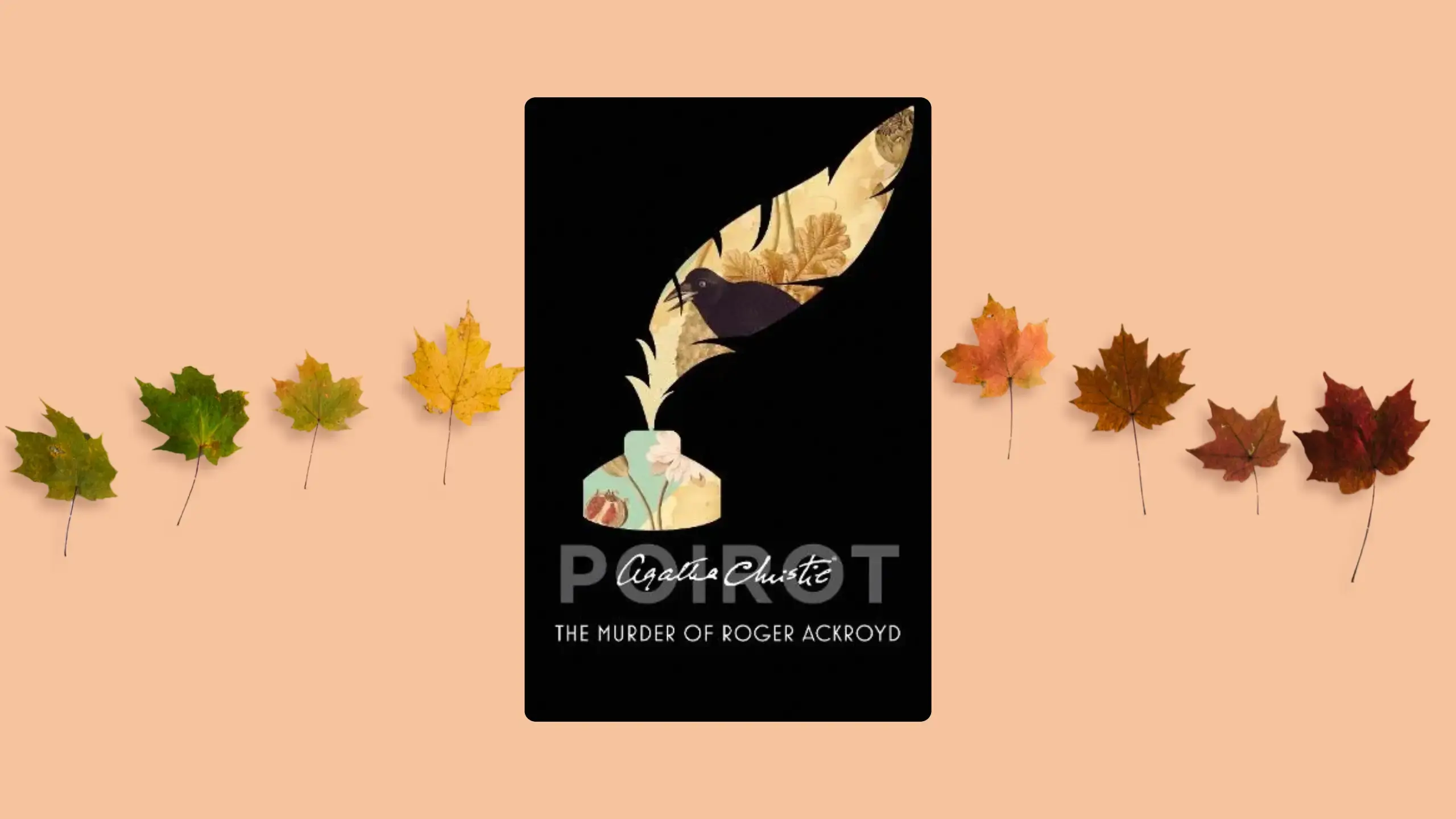
The Secret to Concocting an Agatha Christie-Style Mystery
.avif)
How to Write Intimacy
%20(1).avif)