

The Big Edit
Polish your manuscript ready for submission.
The course for an author career.



The final chapter of your writing journey
Polish to publishing-ready perfection.
Have you completed the first draft of your story? Congratulations! Now, it’s time to edit.
You’ll work one-on-one with professional editors of bestselling and award-winning books, who show you how to review, revise, and refine your novel to the highest publishing standards.
Editing is what differentiates writing amateurs from published authors
If writing is the heart, editing is the head.
And with The Big Edit, you’ll be taught all aspects of the process by masters of the craft—from interrogating the structure and shape of your story to developing your technical writing skills on a sentence-by-sentence level and learning how to create a pitch-perfect submission package.
.avif)

In good company
We’re the editing course taught by Big Five publishing professionals

Just imagine...
An editor from Penguin Random House, Macmillan, HarperCollins, Hachette, or Simon & Schuster reading your plan, your outline, and your opening chapters, and telling you exactly what to fix.
(With The Big Edit, they will.)

What if...
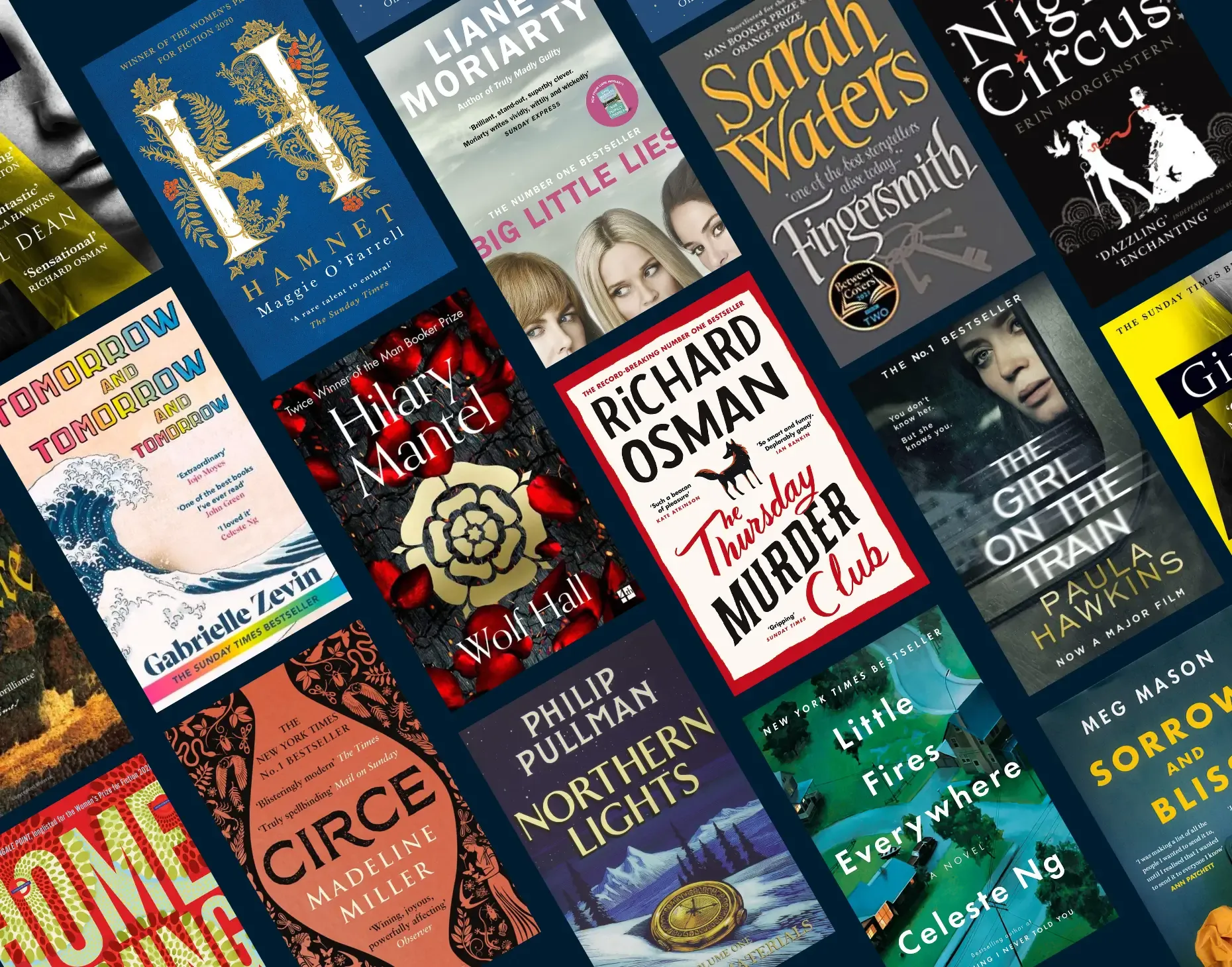
You qualify for our submission service to the literary agents who represent Meg Wolitzer, Madeline Miller, Liane Moriarty, Celeste Ng, Michael Ondaatje, Richard Osman, Marilynne Robinson, Philip Pullman, Tess Gerritsen, Andrew Sean Greer, and Tom Clancy?
(By invitation.)
Submissions to the top global literary agencies
If your manuscript is a match for one of our trusted literary agents, you will be invited to enter our submissions process. There is no cost for this service and we neither ask for nor accept commission. It is by invitation only.
We’re the online writing course recommended by leading literary agencies.
Renowned literary agency partners
Including CAA, William Morris Endeavor (WME), The Book Group, United Agents, and more.
.avif)


.avif)

.avif)
.avif)

.avif)
.avif)
.avif)
.avif)


.avif)


.avif)


.avif)
.avif)
.avif)
.avif)

.avif)

.avif)


Work with editors from the world’s major publishers
Your course includes editorial sessions with former acquiring editors from major global publishing companies, including Walker Books, Titan, Oneworld, and the Big Five—Penguin Random House, Hachette, HarperCollins, Simon & Schuster, and Macmillan.
They’ll oversee your revision process and help prepare your submission package for querying literary agents.

Prepare the perfect plan for the best version of your story with the cool logic of the Big Edit lessons

Get feedback from your editor on your story and chapter outline before you revise with The Big Edit First Session (Story Development)

Begin revising your manuscript with step-by-step guidance from the course lessons and get feedback from our beta-reader workshop

Get line-by-line feedback and a live debrief from your editor on your final submission package of the first chapters, your synopsis, and pitch with The Big Edit Second Session (Query Review)

Revise and revise using our guidance to become pitch-perfect for submission to literary agencies
The Big Edit Course
Edit your novel
Revise and polish your manuscript to the highest publishing standards with in-depth feedback from your professional book editor.
Welcome to The Big Edit
Structural Development
The Line Edit
The Submission Process
“The secret of good writing is to cut it back, pare it down, winnow, chop, hack, prune, and trim, remove every superfluous word, compress, compress, compress.”
The right editor for your book
Meet the professionals from The Big Five major publishing houses including Penguin Random House, Hachette, Harper Collins, Simon & Schuster and Macmillan.

.avif)


.avif)




A cautionary tale…
Worked with a single editor before?
Each publisher has a specific goal and many commissioning editors work in only one genre. So, when working with just one editor, be careful to ensure that they truly have experience in your niche.
Equally, a single editor might bring some of their own personal taste and judgment to the process. But a broader view can better set you up for success.
At The Novelry, we meet as a team every week to discuss our writers’ works-in-progress. So you’re guaranteed the unique advantage of combined editorial advice and expertise.
.avif)

Now represented by Watson, Little after submission by The Novelry
‘The best decision for my book. The course materials offered the tools to excavate the layers and plumb the depths of my story. The fabulous team at The Novelry were brilliant at cutting through to the heart of the problem, and their suggestions on the text helped me understand the nitty-gritty of creating on the page.’

‘I felt at home and confident again’
‘I knew I had a story that was demanding to be told, but I just had no idea where to start. I did a lot of research, but I didn’t really have the confidence to begin until I joined The Novelry. Once I joined, I felt at home and confident again. Writing is such a solitary endeavor, and it made me feel less alone and more supported. The community has been supportive and nurturing, and I would highly recommend it to anyone serious about writing fiction, especially if it’s your debut novel and you bite off more than you can chew, as I did!’
.avif)
Tanya Michele Amador
‘A phenomenal experience’
‘During this course, I gained an appreciation for planning and plotting. I think I may always discover first, plan second, but this course brought me closer to doing those simultaneously. I’ve walked away with a deeper understanding of character and of the importance of the second character. This course was the glue I needed to hold the rest of the stuff I learned in place. This was a phenomenal experience. I could not possibly be more ready and prepared for success. The lightbulb came on during this course, and I’ll be forever grateful.’
.avif)
Rosie Sennett
‘Extremely grateful for the professional expertise’
‘What I found particularly beneficial was to be able to step logically, through a series of progressions; compiling the first draft, learning how to edit that myself, before handing it over for more rigorous assessment and editing. I’m extremely grateful for the professional expertise and friendly assistance, who ensured that at every contact point, the novel was made better than what it was before.’
%20(1).avif)
Geoff Parkes
‘I am beyond thrilled with how far I’ve come’
‘Since joining The Novelry in early 2022 with nothing but a spark of an idea and the determination to (somehow!) turn it into a novel, I have been blown away by Louise Dean’s course materials, the author coaching, the community of writers and the incredible support from editors to boot. I am beyond thrilled with how far I’ve come, both with my writing and signing with such a top-notch agent, and am so excited for my future writing career. Thank you, The Novelry!’
.avif)
Nikki Allen
‘I felt like part of the community’
‘I joined The Novelry after I’d finished my first draft. I wanted to make sure that I was giving my novel the best chance possible and getting to work with an experienced editor was such a selling point for me. What I didn’t realize was how much of an anchor The Novelry would become while I edited my manuscript — joining a Zoom or re-watching a lesson when I needed some motivation, feeling part of the community of other writers, and getting much-needed pep talks from the amazing writing coaches. I’m so grateful to the entire team at The Novelry and I am thrilled that they introduced me to my fantastic literary agent — it still feels very surreal to get to say that!’
.avif)
Anna Brook-Mitchell
‘One of the most transformative experiences of my writing life’
‘The expertise, encouragement, and honesty I received—from the editor, the coaches, and the structure of the course itself—gave me the confidence to push past my limits and produce the strongest work I’ve ever written. I’m deeply grateful.’
.avif)
Sofia Georgiou
‘I’ve adored these lessons’
‘I’ve adored these lessons at The Novelry. They’re so propulsive but also ridiculously clear. The teaching is practical, example-rich, structured, and industry-facing. I’m not just writing with feeling now, but with intention.’

Nazmin Rahman
‘After nearly giving up the dream, I feel like I can absolutely be a novelist’
‘The class did a terrific job of unsticking my writing progress. After nearly giving up the dream, I feel like I can absolutely be a novelist. I have hope for my writing career in a way I haven’t had since my undergraduate days.’
Joie Filippini-Gibbons
‘From the first lesson, I felt like I came home’
‘I highly recommend The Novelry. From the first lesson, I felt like I came home to a writing course that welcomed me, that had been waiting patiently in the shadows for me to finally find my way home.’
Michele Collum
‘Taught me that imagination is just the beginning and I can do it’
‘I was made to feel welcome, and learned that with the right help, a measured approach and a lot of determination and persistence, you can achieve your goals. The Novelry taught me that imagination is just the beginning and I can do it.’

Glen Smale
‘The Novelry will help you accomplish your dreams’
‘If you’re serious about writing a novel, this is the school to help make it a reality. I never thought I could do it. A year later, I have. If you’re willing to do the work, The Novelry will help you accomplish your dreams.’

Priscilla Kennedy
‘Chock-full of smart, actionable advice’
‘Chock-full of smart, actionable advice. My editor took my submission package to the next level, handpicked the perfect agents and gave me the benefit of her industry wisdom throughout the entire submission process.’

Helena Echlin


Why The Big Edit?

Created by a Booker Prize-listed author
For the highest standards of fiction.

Progress at your own pace
A year’s access to the course.

Stay a little longer
Life. It happens to the best of us.

Money-back policy
Not for you? Just let us know!

Write with the best in the business
Award-winning authors. Publishing editors. Leading literary agents.

Access to Big Five publishing editors
Add further paid feedback sessions when you need them, as a member.

40+ workshops a month
In addition to your course.

Genre expertise
What’s your style?

Video masterclasses
From the likes of Kristin Hannah and Yann Martel.

A supportive writing community
Open 24/7 worldwide. The best beta-readers.

More 5-star reviews
Than any other writing course. The Novelry is the world’s top-rated fiction writing school.

A clear path to publishing
Yours if you want it. Fine if you don’t. We will help you reach pro standards.
Edit to publishing standards
The Big Edit




Pay in 4 interest-free, or monthly plans up to 24 months. Subject to eligibility. Terms set by the provider.
PayPal Pay in 3 and other plans where eligible. Terms set by PayPal.
60+ live writing workshops a month. A library of masterclasses with bestselling authors. An online community open 24/7. Genre fiction workshops and small writing groups. Feedback from beta readers who are writers. Invitations to events.
Edit your manuscript to publishing standards
Two one-on-one sessions online with an editor to prepare your revised storyline and review your submission package. Recorded for you to keep.
After which you can extend your membership from just $59 / £49 a month.
Noteworthy advice
Have a complete draft? The Big Edit is your course.
Earlier in the journey? The Finished Novel Course takes you from first idea to submission — and includes The Big Edit.

FAQs
If you’re bursting with questions we haven’t answered here, check out our full FAQs page or feel free to get in touch.
We strongly advise against this, particularly if your goal is to publish your book.
Literary agents and publishers will ask you to assure them that you didn’t generate your work of fiction using AI before you sign the contract. AI-generated creative work cannot be registered for copyright per the guidance of the U.S. Copyright Office.
At The Novelry, we train writers on where to find authentic ideas for the stories only they can write and how to write them to the standards that meet the requirements of traditional publishers.
The Big Edit is designed for writers who have completed a solid draft of their novel and who feel confident they are ready to develop the editorial skills needed to take it to a professional, publishing-ready standard.
If you have a messy first draft and are still shaping the story itself — working out major plot points, restructuring chapters, strengthening character arcs, or substantially rewriting scenes — you'll usually get far more value by taking The Big Write first. Many writers join The Big Write with a completed draft and use the course to rethink and strengthen their novel with the support of a published author coach before moving on to the editorial stage.
Both are one-to-one calls with an editor of your choice from our team, all of whom have acquired and edited novels at the Big Five publishing houses.
The Story Development Session comes at the end of the structural phase. You send us: The Plan — your story on one page, with a synopsis of 500 to 750 words; a chapter outline of up to 2,000 words; and, if you'd like, 500 words of prose for guidance on how your voice sits within your chosen genre. The conversation is diagnostic and deliberately big-picture, focusing on the central question, structure, plot beats, stakes, character development, theme, title, hook, and if the pitch is distinctive enough for your genre and the current market.
The Query Review Session is toward the end of the course. You send your first three chapters (up to 30 pages), a one-page query letter, and a one-page synopsis. Your editor will give you close feedback on the material, making suggestions to improve your query package and, if your opening is ready, they'll invite you to submit your full manuscript, which is how our submission service begins. If it isn't ready yet, you can continue polishing your material and return it to the team for review later.
This is a self-paced course that includes 35 comprehensive lessons, combining video and text, to guide you in editing your book. You'll be guided step by step, with downloads and tools arriving at just the right point in your editing journey.
Start the course before you touch that manuscript to learn how to approach your edit. Each lesson acts as a complete reference guide that you can return to time and again during the editing process. Each lesson comes in five parts: what it means, why it's important, how it works, how to apply it, and your next steps.
Alongside your editorial sessions, you'll enjoy the support of the online community and be able to join us for live weekly writing classes and regular online workshops suitable for those at every stage of their writing and in every genre.
To edit a novel, we suggest you work in chunks of time, 2–3 hours a session, when you can. Your editing sessions don't need to be daily because we will ensure you have a brilliant working plan to pick up where you left off and continue your progress. Take your time — writing is rewriting!
Yes. You can review our terms and conditions here. If, for any reason at all, the course is not for you, you can get a full no-questions-asked refund within the first fourteen days after purchase. Just email us at hello@thenovelry.com to let us know.
Our courses are accompanied by a translation tool that renders the course in 99 languages and includes a read-aloud option. Some of our writers use these for dyslexia or alongside a screen reader. If you'd like to check the platform works with your setup before enrolling, email hello@thenovelry.com.
The best decision for a writing career
‘Joining The Novelry was the best decision I made for myself and my writing career. The Novelry is not just an amazing writing course; it is so much more. It is also a community of ambitious writers, authors, mentors, editors, and all-round lovely people who will be with you on your writing journey. I joined before I even had a story idea, and since then, I have written a first draft, been through rounds of edits, and have a complete manuscript I am really proud of. Throughout their submission process, I had support and guidance from The Novelry team. I am so glad that I found my home here at The Novelry and that I am now represented by James Wills of Watson, Little. I cannot wait to continue to grow as a writer within The Novelry community.’