
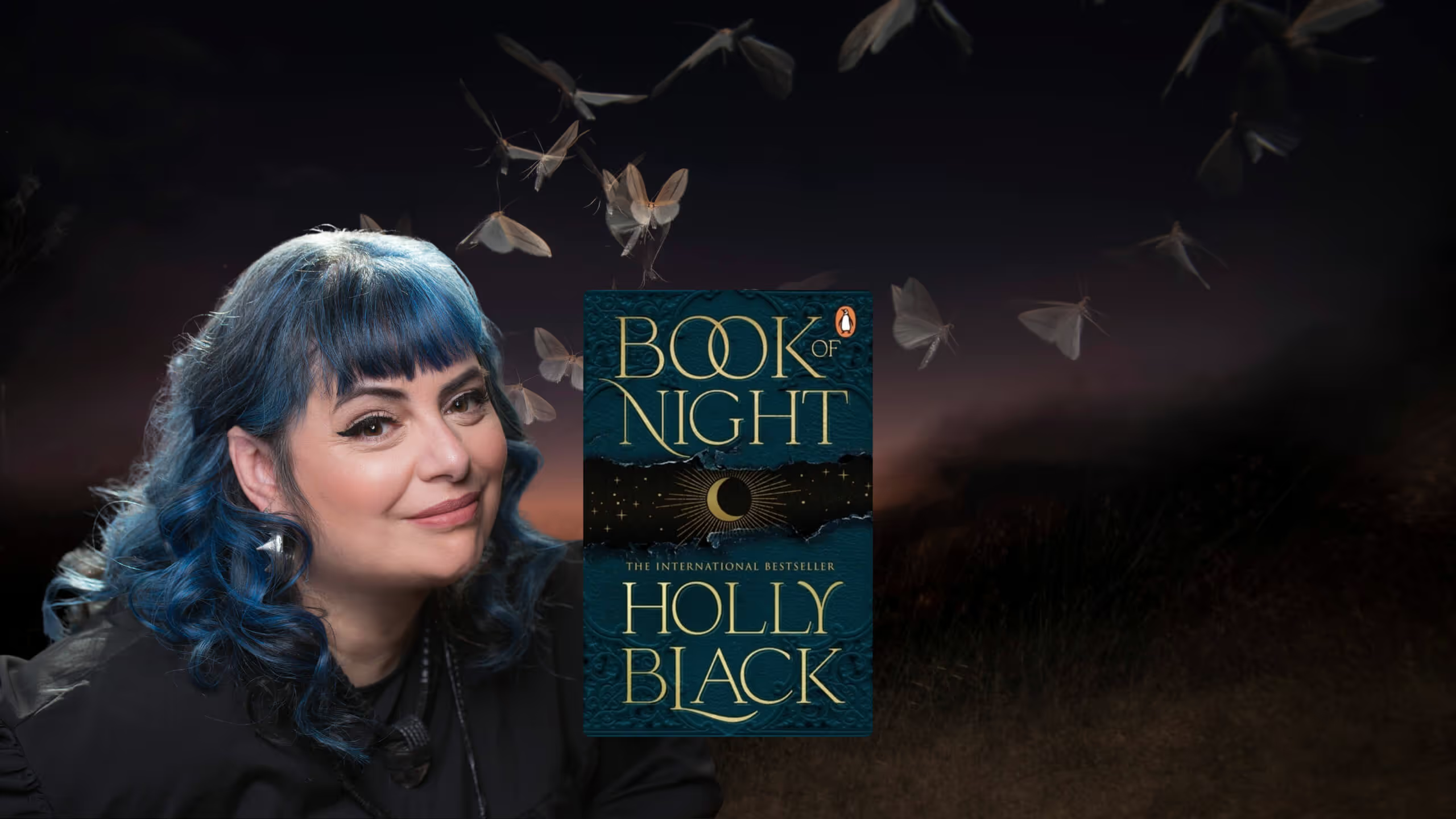
Urban fantasy writer Holly Black has been casting a spell on young adult audiences since the early 2000s, mixing the fantastical with the real world in the Modern Faerie Tales series before collaborating with Tony DiTerlizzi on The Spiderwick Chronicles. We recently welcomed the #1 New York Times bestselling author for a bewitching Q&A full of writing tips (chaired by our writing coach Dhonielle Clayton), to discuss heightening the drama of a novel using traps, bargains, and snares designed to test your protagonist and how to use wickedness to keep your readers gripped.
From. magical realism to paranormal romance, and from novels to comics, Holly’s work has brought so many readers together with her fun, modern interpretations of one of our oldest ever genres.
In conversation with Dhonielle, Holly mused on other challenges during the writing process, such as the benefits of writing alone versus writing with others, tackling the editing process head-on, finding inner acceptance with re-drafting, the promises you make in a first chapter, and much, much more.
A bargain sets the plot in motion
Whether it’s romantic relationships or a moral dilemma, your main character needs a point of tension in your story. The writers discussed the power of bargaining tools in storytelling, especially when said story has supernatural elements. As Holly explains, the idea of a bargain can help create high stakes in your book and give your protagonist an interesting crossroads.
I think bargains can be used in a couple of different ways. A bargain can be just to move things along, right? Here’s the bargain: you do this, I do that. And it’s not sort of sitting in a critical place in the book. But I think there always has to be some level of discomfort. It has to cost [your character] something. But then I think if it goes to a different place in the book, it really has to be very high stakes. The thing you’re giving up, or the thing that you’re paying with, has to cut to the heart of what kind of story you’re telling.
—Holly Black
Supernatural elements can help you create new rules
If you’re hoping to create good fantasy or sci-fi, you have a whole realm of rules you can build around your characters to move the cogs of your plot.
In Jonathan Strange & Mr Norrell, for example, creating bargains with faeries can lead to deep trouble. In the series His Dark Materials, being separated from your daemon is hugely traumatic for the character.
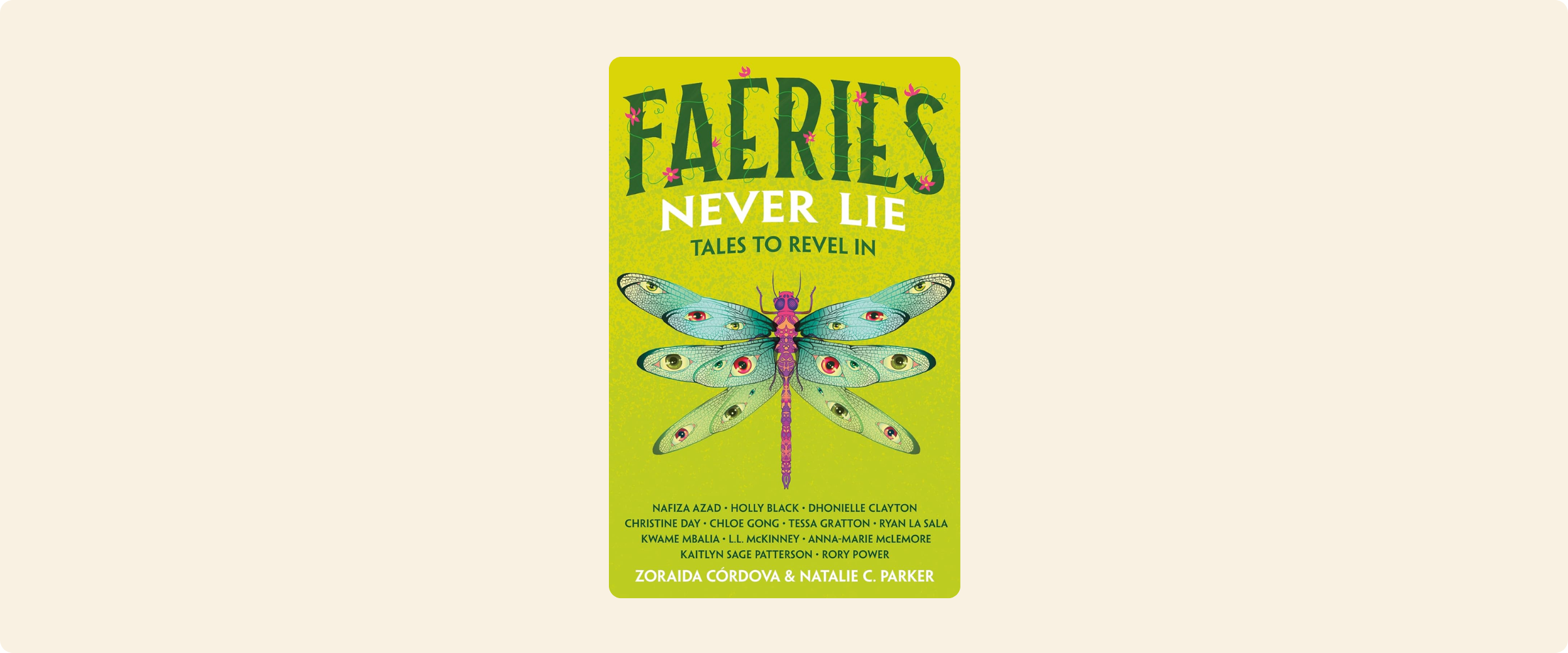
A big factor in Holly’s stories and those of other fantasy writers is that faeries cannot lie. But this rule actually helped build her world for the reader, rather than hinder her.
Faeries can’t lie. It seems like it would be hard to write, but it turns out it does an enormous amount for a book, because having characters lie in books is really, really hard, because you’re already trying to explain to people how the [fantastical] world works. So the idea that someone in the book also lies can really mess with the reader, because they are unable to then figure out how the world actually works, because they’re working on two sets of information.
And I think... because of that, you wind up being able to lay out the world in a sort of gamified way, where even if they do tell you something that isn’t true, you could have figured it out, so you’re kind of playing fair.
You’re trying to figure out the stakes of a book, you’re trying to figure out so many things at the same time as a reader, and a bargain can say, okay, this pays attention to this. Here’s how the book goes. Here’s when the bargain takes place. It’s a really useful way to bring in information into one moment.
—Holly Black
Holly Black’s writing advice
%20(1).avif)
The editing process requires a level of acceptance
Holly and Dhonielle also delved into the scary world of re-drafting, which can sometimes be even more daunting than the blank page. For example, the allure of a beautifully ordered outline is always more tantalizing than the messier reality of tidying everything up. Many authors even prefer it. But as Holly divulges, re-drafting can actually be a really valuable part of the process and can help you start thinking about deeper layers of your story.
I find drafting to be hard-going. It is the process of taking the idea you had in your head and turning it into crap. But I really love editing, I like the process of making it better. At that point, I don’t feel like I can make it worse!
And I love the idea of outlining. I’m sitting here in my office, I’m surrounded by colored pens, notebooks, little pieces of graph paper, whatever. If I could grid out perfectly my story on the wall, I would be so happy. I love that kind of stuff.
But I think I’m slightly too optimistic when I’m planning, because I’m like, sure, this sounds fine. And so I’ll make this bargain, and I’ll be like, oh yeah, this seems fine. I mean, I don’t know that many details, but I don’t need to; I’ve got this. And when I get to it, I’m like: who wrote this outline? This doesn’t make any sense!
I think that you have the process you have, and you can refine it, right? You can mess with it. I never want to say that anybody can’t change their process, because it’s frustrating to me when people say that. But I also think you need some level of acceptance or some level of working with the way you work, even if it means: “I need to write this much, then I can plot this much.”
—Holly Black
{{blog-banner-14="/blog-banners"}}
You can read 100 books on how to write fiction, but sometimes, that concrete premise you’ve been hoping for might take a different form. Maybe it’s something non-corporeal, more like a feeling. Holly spoke of the “sensation” she sometimes feels when creating a story, akin to writing a classic fairy tale, even if she’s setting her novel in the present day.
Personally, I feel like part of my problem, and I’m really curious if this is part of your problem, is that I don’t start with ideas, I start with a feeling. And the feeling is almost a textural feeling. A lot of times when you read old fairy folklore, it gives me a particular sensation.
And I would like to write a book that would create the sensation in the reader that I experience when reading a fairy tale. It’s not even fully emotional, it’s almost an aesthetic response that I think is part of the reason I find it very difficult to construct it ahead of time, because the aesthetics of that moment are kind of hard to predict.
—Holly Black
A first chapter makes a promise to the reader
Every novel has an important job to do in its first chapter. You’re setting the tone, establishing expectations, and hinting to your reader where this is all going. No pressure!
As Holly suggests here, it’s also about trust—convincing the reader that they’re in capable hands, that the time they invest in this novel matters. In those all-important opening pages, a writer is not just introducing a narrative, but making a promise about how it will unfold. Whether it’s urban fantasy like Holly, or anything from children’s books to adult books, your first chapter will naturally introduce your genre and interesting themes to your reader.
What a first chapter does, is it makes a promise. Is this a horror novel? Is this a romance novel? Is this a fantasy novel? It tells you how to read it. And one of the things that you’re trying to convince a reader is: I know what I’m doing. Trust me. Put in this time, and trust me, because what I am doing in this first chapter is telling you that you are safe here.
—Holly Black
The “real” draft emerges later in the process
The idea of a “finished” draft is often far more fluid than it sounds. The process is rarely so linear. So what counts as the “real” draft—the one that’s ready to be shared? The one with all those vivid descriptions and perfectly fleshed-out characters? If you’re willing to “bless this mess,” your manuscript will eventually emerge from the wreckage.
So much depends on how loose you’re willing to get in early drafts. I also think it depends on what do you consider to be a draft? Because one of my besetting sins is not finishing before I go back and revise. And I’m trying not to do that anymore. But that often means [the drafts] are looser because I’m very much aware of the fact that I haven’t nailed down earlier stuff. So the later stuff becomes more unlikely to be all of the stuff I need it to be. So now, probably, I would say that my third draft is the draft that my editors are actually going to see.
—Holly Black
Writing multiple books changes your perspective
Writing one book is such a momentous event, but what happens as you move from one project to another? How does a writer feel when they’ve written, say, 20 novels?
.webp)
With several worlds, characters, and compelling urban fantasy settings fully realized, Holly is now discovering new favorite things to bring into her stories.
I think as a writer, for your first book, it’s all your favorite stuff. And then your second book is your second favorite stuff. And then, by the time you’re writing your 30th book, I now have to really think about what else do I love? What else is out there?
Can I go back to some of the things that I love and sort of look at them very differently? Think about names. Your first book, you’re like, “What are my favorite names?” Right? And then at some point, you’re like, “What are names?” I even put aside one of my favorite names because I didn’t want to name my son after anybody I had named in a book!
—Holly Black
Sharing your ideas doesn’t make the work less yours
One of the common struggles many writers worry about is telling other people they’re actually writing! And accordingly, that internal worry that bringing in other people somehow dilutes your idea. But as Holly argues, discussing your work with other writers can actually make your creative journey all the richer.
Whether you work with a writing group or just tell one person one idea, the act of accepting, rejecting, and reshaping suggestions is a brave thing to do.
I think we have this idea that we have to come up with our stories alone. And in this space where we are up late at night with a candle burning beside us, right? But if you reach out to somebody, and somebody helps you with your book, it is still your book, and I will prove to you it’s still your book. Because here’s what’s gonna happen. You’re gonna say, “Hey, buddy, what could happen in this scene?” And your friend is gonna say, “What about this?” And you’re gonna say, “No.”
—Holly Black
.avif)
How do you know the answer is no? Because it’s your book, right? It’s your book. And so you have this platonic idea of your book, all the way up here. And so your friend is going to make a bunch of suggestions, and then it’s going to trigger something for you, where you’re like, “Oh yeah, maybe that, but turn it this way.” It’s your book. You came up with the answer because you know which of these answers was the right one. They’re not telling you your book, they’re helping you tell yourself your book.
—Holly Black
A few Holly Black-inspired writing tips
- If you’re writing urban fantasy, like the stories Holly writes, or a totally different genre, make the facets of this genre clear in chapter one.
- Don’t be afraid to talk to other writers about your story. It’s still your book!
- Play around with stakes and bargains when you need to give your character more conflict.
- If you don’t have a strong idea for your story, what “feeling” do you want your story to have?
- Accept that re-drafting is part of the process. Get some colored pens. Have fun with it!
Whether you’re starting your first draft or confronting the editing process, join The Novelry—the fiction writing school for novelists—and discover the creative writing course that’s right for you.

.webp)
.jpg)