.avif)
They say not to judge a book by its cover, but how about its first page? The moment before you reach chapter one and discover a short quote to set you on your way, you’ve stumbled upon an epigraph.
You’ll have come across these little features time and time again while reading, but today we’re going to investigate their history and why they’re so effective. And, indeed, whether you should use one in your own novel.
Book epigraphs can be tone-setters, giving your reader a taste of the themes and moods to come. It could be from a fellow writer, someone from a different creative field, a fictional character, someone from your own life—anyone. An epigraph could be a riddle, a joke, a line from a poem, an extract from a historical speech, a philosophical statement, or something funny your auntie said once. And that is their beauty.
But what is the point of inserting these quotations from other writers before your words? Are they essential or pretentious? Should you choose an epigraph before you start writing, or after the book is finished? What can a good epigraph add to a book? And can a bad epigraph damage a book?
Our writing coach Piers Torday, the award-winning author of eleven books for children, has used epigraphs in many of his novels... Yes, for children! If you’re curious about using an epigraph in your writing or simply mystified why anyone bothers, find out more from Piers and The Novelry team below. But first: a quick etymology lesson.
Where does the word “epigraph” come from?
The word epigraph comes from the ancient Greek “epigraphē,” meaning an inscription; an epigraph writes upon your story before it has even begun.
To split it up, the prefix “epi” can mean “upon,” while “graph” comes from gráphos, meaning, roughly, to write.
And what exactly is an epigraph?
An epigraph is a short quotation, phrase, or saying inserted at the beginning of a book—after the title and dedication but before the author’s note or prologue/first chapter—the section of any book known by publishers as “prelims” or the more informal “front matter,” which also contains any contents, maps, forewords, etc.
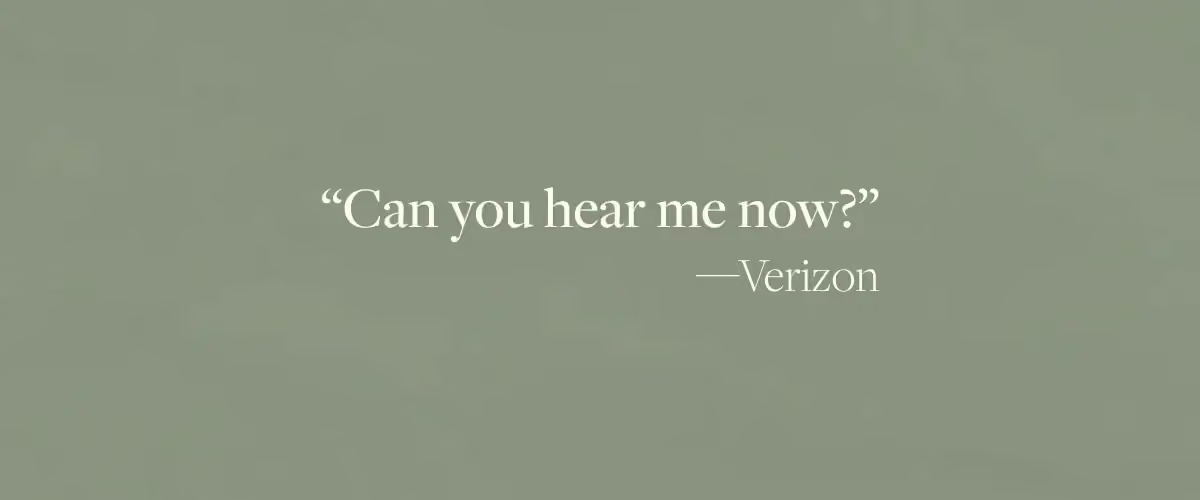
The function of the epigraph is to set the tone, introduce a theme, or frame the reader’s expectations for what they will discover in the pages that follow. Epigraphs can also appear at the head of individual chapters or sections, as in Richard Adams’ Watership Down, where he quotes almost everyone from Aeschylus to Napoleon.
You might even like to use a dictionary definition, as The Novelry coach Sarah Turner did for one of her books:
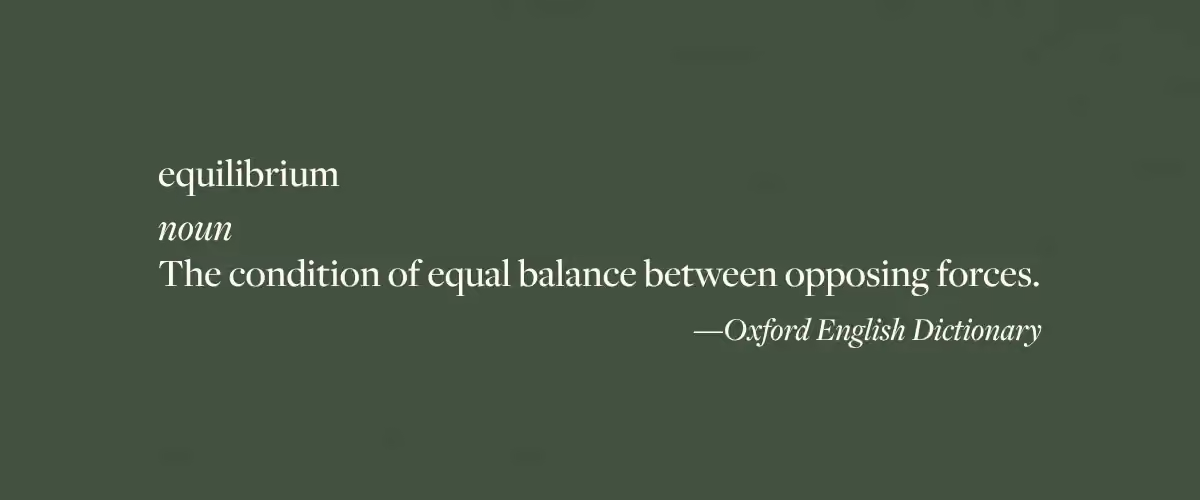
An epigraph can be from a verse of a poem, prose, song, scripture, proverb, or something the author has written themselves.
Finding the right one can really help steer the right direction. For my first novel, I always knew what the epigraph would be. It almost feels like I wrote the book in order to explore the epigraph: “The past is never dead. It’s not even past.” (William Faulkner)love epigraphs and finding the right one can really help steer the book in the right direction. For my first novel, I always knew what the epigraph would be. It almost feels like I wrote the book in order to explore the epigraph: “The past is never dead. It’s not even past.” (William Faulkner)
—Tara Conklin
How is an epigraph different to an epigram?
Good question. Yes, an epigram is different to an epigraph, as it’s usually, specifically, a satirical statement or witty phrase. Oscar Wilde was famous for them. And they don’t have to appear at the start of a book either. They’re very popular with poets, as they can appear in verse. So, with that in mind, let’s let an incredibly famous poet explain.
What is an epigram? a dwarfish whole,
Its body brevity, and wit its soul.
— Samuel Taylor Coleridge, Epigram
Oh, and before you ask about epilogues... That’s a more general piece of writing that usually sits at the end of a story, perhaps to tie up loose ends. Thankfully, we have a whole explainer article on that matter right here:
Learn about epilogues and how to write them.
Classic literary epigraphs
Let’s open the cover and enjoy some classic uses of epigraphs in well-known literary works, and explore what authors were aiming to achieve with them, with some additional examples.
The single epigraph
This is the simplest, and perhaps the most elegant, form of epigraph.
To Kill A Mockingbird by Harper Lee has a classic single-line epigraph:
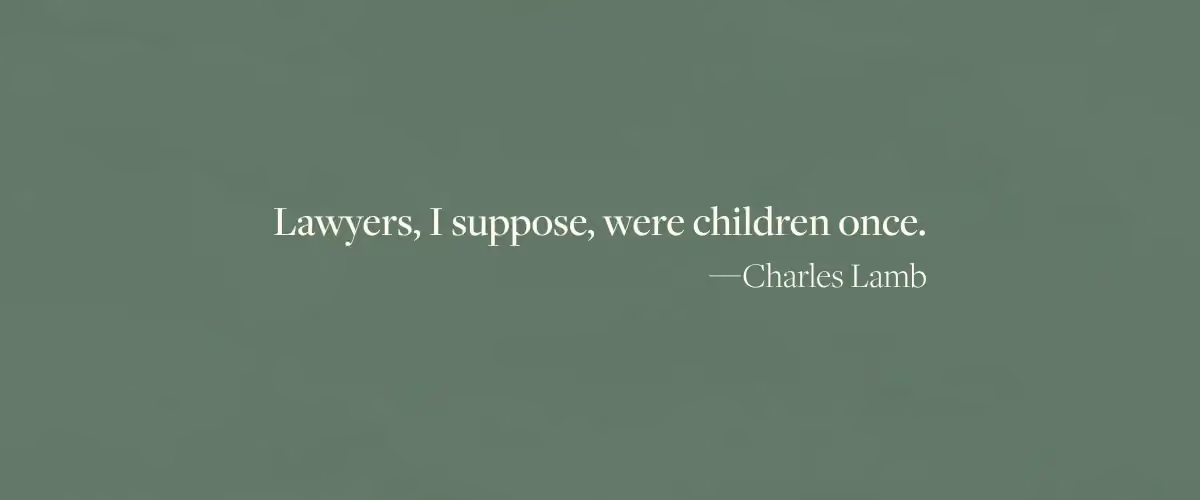
Why did Harper Lee use this quote from the eighteenth-century English essayist Charles Lamb in her 1960 Pulitzer Prize-winning novel To Kill a Mockingbird, about U.S. racial prejudice and hypocrisy?
It completely frames the central themes and characters of the story—that of Atticus Finch, a lawyer, narrated by Scout Finch, his child. It suggests, but does not fully reveal, the moral complexity at the heart of the novel.
.avif)
For me, it’s also a great epigraph because it’s so distinct from the novel. Charles Lamb, writing over a hundred years earlier, could not have foreseen the politics or laws of the Deep South in 1960s America.
This places the quote at a distance from the text and its creator, allowing readers to approach it with total objectivity. Is the novel ultimately endorsing these words of wisdom from a privileged white man of a colonial age, or interrogating them?
Percival Everett is far more direct in his savage, deadly satire about endemic racism and police violence, The Trees, where his epigraph is from General Ulysses Grant:
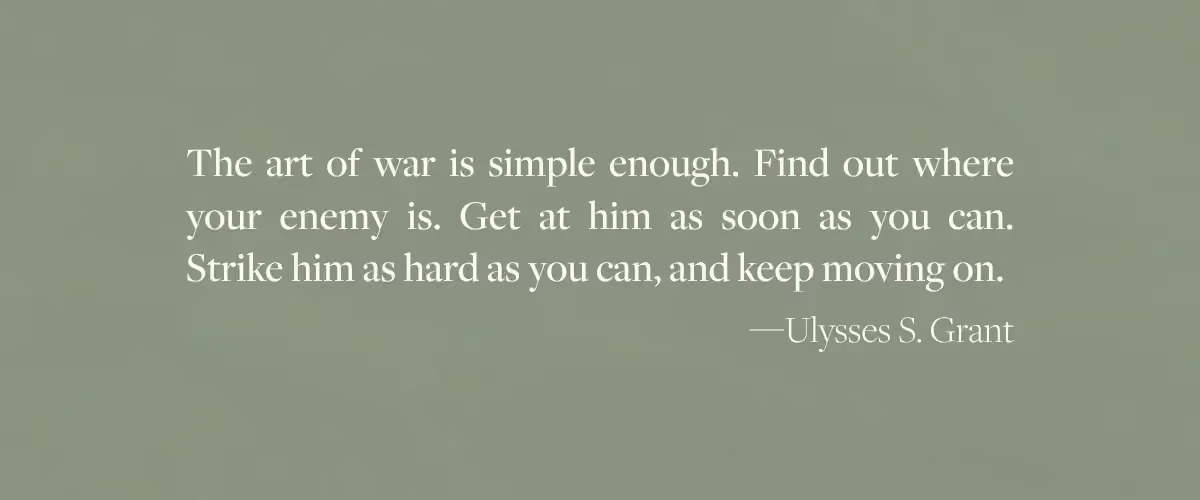
The “whom” in the book this epigraph might refer to—who the enemy is, who is striking—becomes less and less clear as the book goes on, and that’s very much the point.
I like the thematic connections that arise from an abstract input external to the story itself.
—Melanie Conklin
The double epigraph
Sometimes writers may want to encourage this range of interpretations, or express themes too multiple or complex to be captured by a single line, with more than one epigraph. So why not have two epigraphs?
For his fiery debut, The Sun Also Rises, Ernest Hemingway deployed a line taken directly from a conversation with Gertrude Stein. (“You are all a lost generation.”)
.avif)
Then he added a lengthy passage from Ecclesiastes (1:3-7), which meditates on the cyclical nature of existence. “One generation passeth away, and another generation cometh…”
By combining a personal conversation with a famous writer about the devastation of World War I with a passage from one of the oldest and most well-known religious texts in the world, Hemingway suggests the book is both utterly contemporary and timeless.
He is also stating his credentials as a writer who is on intimate terms with famous modern writers and is scholarly enough to quote from the Bible.
It’s a bold statement by a writer who wanted to, and did, enjoy a reputation for boldness.
Multiple epigraphs
It may be that you have so many quotes that have struck you while writing, all of which seem apt in their own ways, that you want to include them all. You wouldn’t be the first across the history of literature, though.
That seems to have been the approach George Eliot took in Middlemarch, where there is no epigraph at the start of the book, but instead, many epigraphs across chapters.
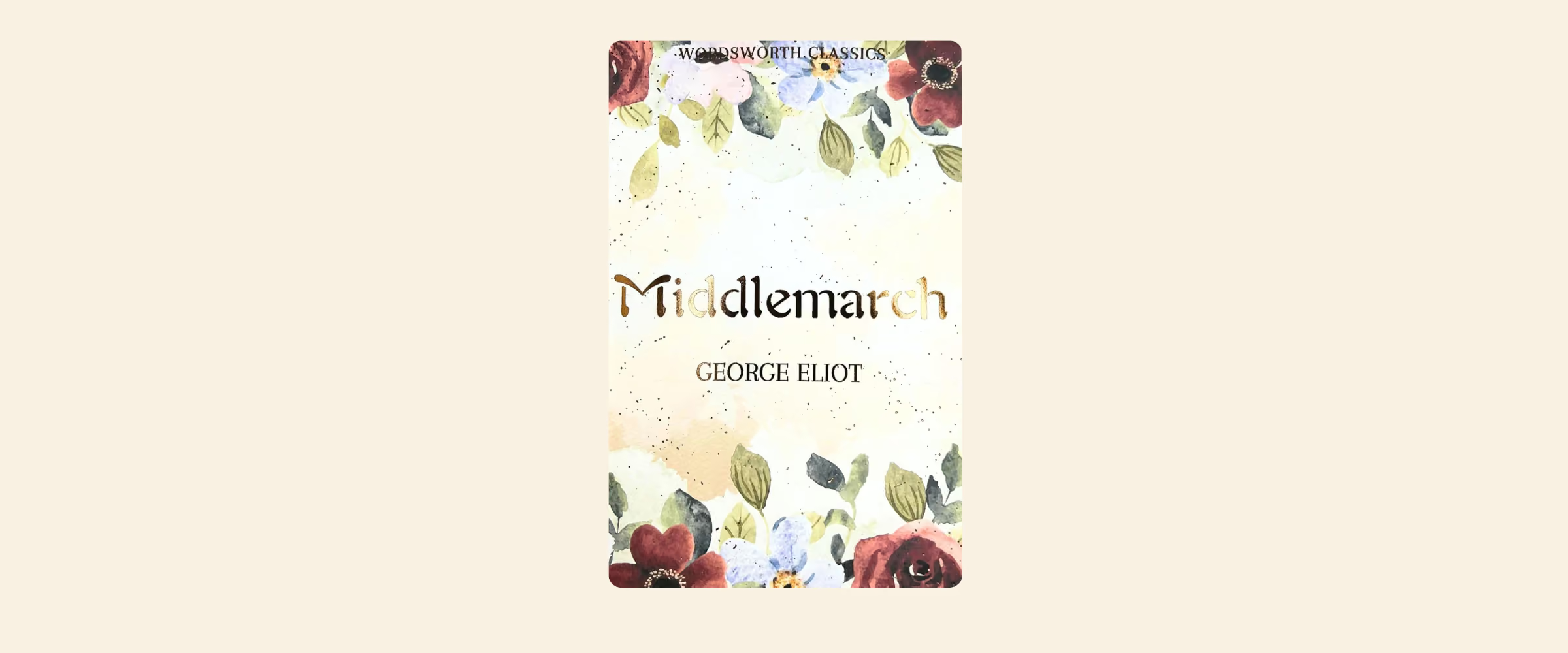
She draws on sources from Chaucer to Wordsworth, but also—audaciously and thrillingly—invents half of them herself. The Novelry’s writing coach Kate Davies is a fan of David Nicholls’ use of multiple epigraphs in the bestselling and Netflix-adapted One Day.
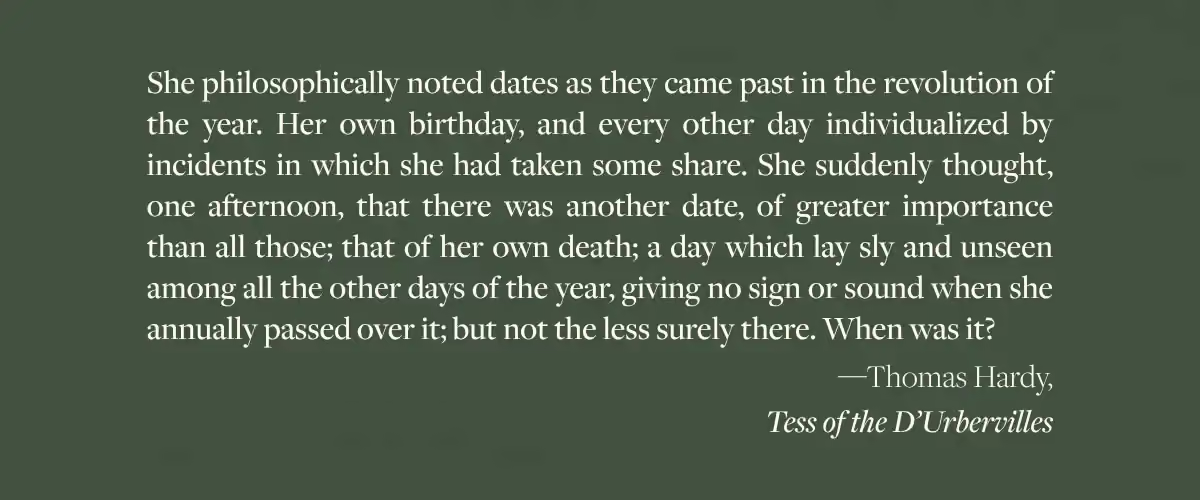
The last one (from Tess of the D’Urbervilles) is the premise of the novel (and the passage that inspired him to write it), so it would obviously have been a spoiler to have at the beginning.
—Kate Davies
Invented epigraphs
If you can’t find the right epigraph, why not make one up? If it’s good enough for George Eliot, it’s good enough for you...
Kurt Vonnegut was also prone to inventing the odd epigraph, but perhaps my favorite contemporary example is Jasper Fforde, who invents metafictional comic epigraphs drawn from the world of his books.
I made up epigraphs from in-world histories, opinions, journals, and recipes for the start of each chapter for my most recent trilogy. It was a fun way to add in extra world-building and to emphasize certain points.
—Andrea Stewart
Choosing an epigraph
The first thing to say is you absolutely don’t need an epigraph if you don’t want one.
I do love an epigraph and have always had one or maybe even two at the beginning of my novels. However, I think sometimes it’s okay to not have one if it’s not serving the story. Every novel is different, so sense into what feels right for you with each.
—Mahsuda Snaith
And if you can’t find the right epigraph for your book, that is no reflection on the quality of the book or your epigraph-hunting skills.
Epigraphs often present themselves by chance. For example, while researching my fantasy series Midnight Treasure, set in a fantasy version of Transylvania, I came across this quote by the travel writer Patrick Leigh Fermor. He discussed the region’s mysterious history, where disinformation and censorship...
...the twin villains of historical conflict, stalk about the shadows with dark-lantern and bow-string.
—Patrick Leigh Fermor
That just sparked something in my imagination, and it was an epigraph for many drafts.
But in the end, the dark lantern became a key fantastical treasure in my story, and I found a similar but better epigraph from the poet Gerard Manley Hopkins:
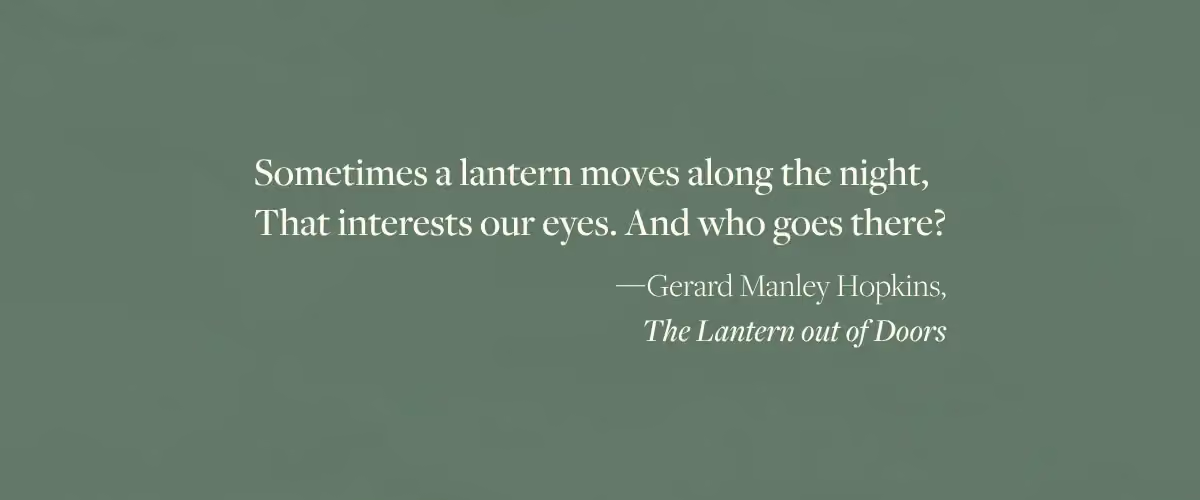
Still a lantern, more shadows, more night, but more open-ended and general than the Fermor quote.
Sometimes you might find an epigraph (or two) that works for drafting, as a kind of lodestar to write to, as The Novelry coach and author Katie Khan does.
I have an epigraph in my WIP which has the exact vibes I’m going for, and so every time I open my manuscript I kick my feet a little and think, okay, how do I bottle that feeling in a novel?
—Katie Khan
But when you actually want to share the story with agents, publishers, and readers, you may want a quote with a more accessible meaning for the reader, or even no published epigraph at all.
You could even, as The Novelry coach and suspense author Amanda Reynolds has done for her latest book, The Memory Foundation, use a line from later in the book as the epigraph:
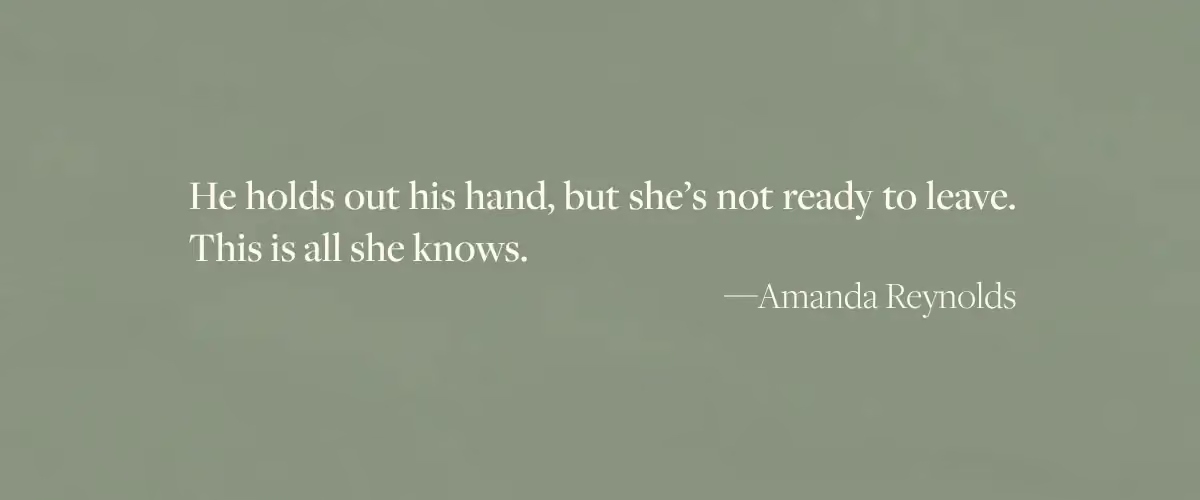
Where to find an epigraph
Poems (and a note on song lyrics)
Perhaps the most obvious and plentiful source of epigraphs is poetry. Read poetry, and then read some more poetry.
—Piers Torday
More than any other literary form, a poem—of every kind—lends itself to quotation, and is the art of packing as much meaning and richness as possible into as few lines as possible.
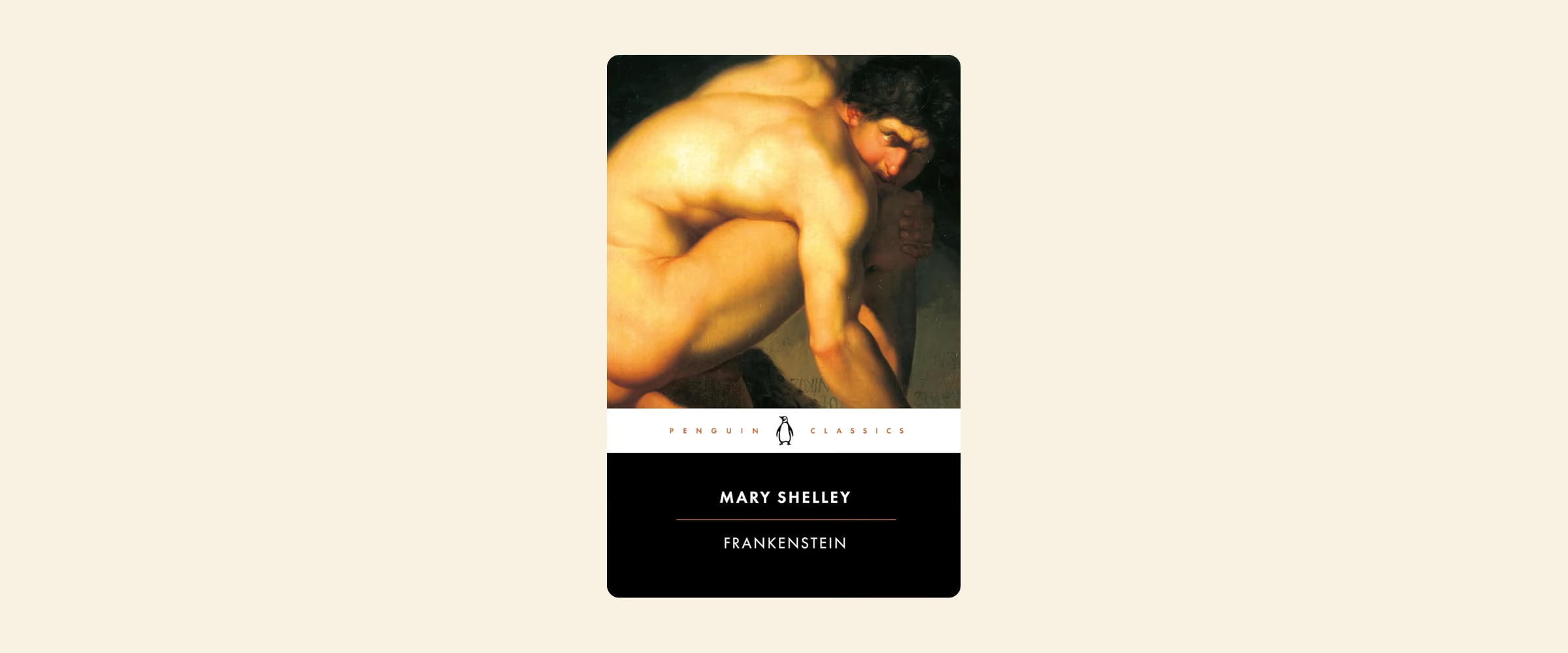
Mary Shelley’s Frankenstein is a glorious example of this, using this quote from Paradise Lost to perfectly set up her classic horror story:
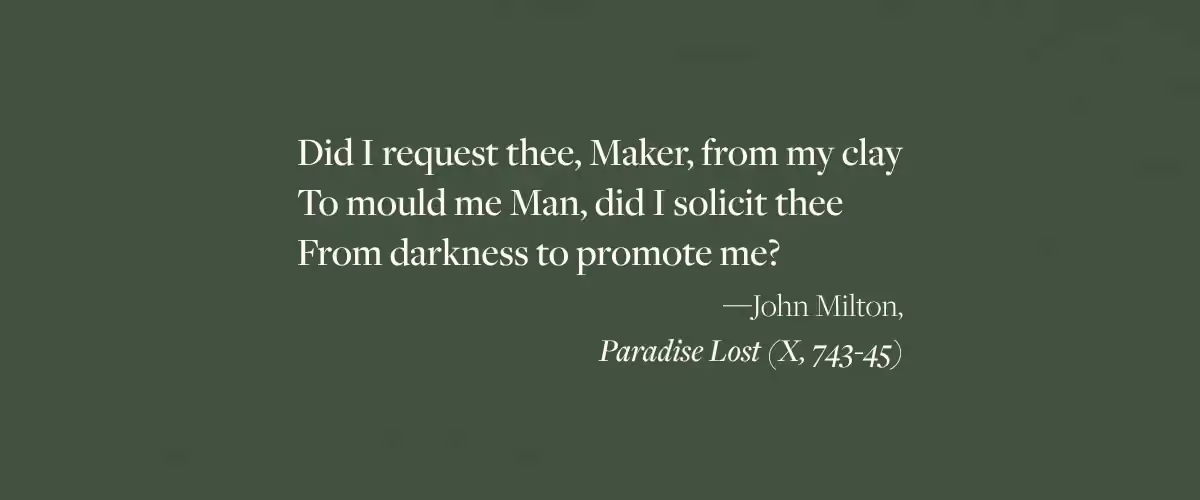
If a line or a verse strikes you, write it down—in a notebook or on your phone. If it isn’t the epigraph for your next book, it might be for the one after.
If you would prefer something more contemporary, like a lyric from your favorite song, make sure to check my note on copyright restrictions and fair use down below.
Some authors who have a spare bit of cash, such as Stephen King, have enjoyed the use of lyrics across their works with great effect. This Neil Young lyric, used for his horror classic It, makes for a very well-chosen epigraph:
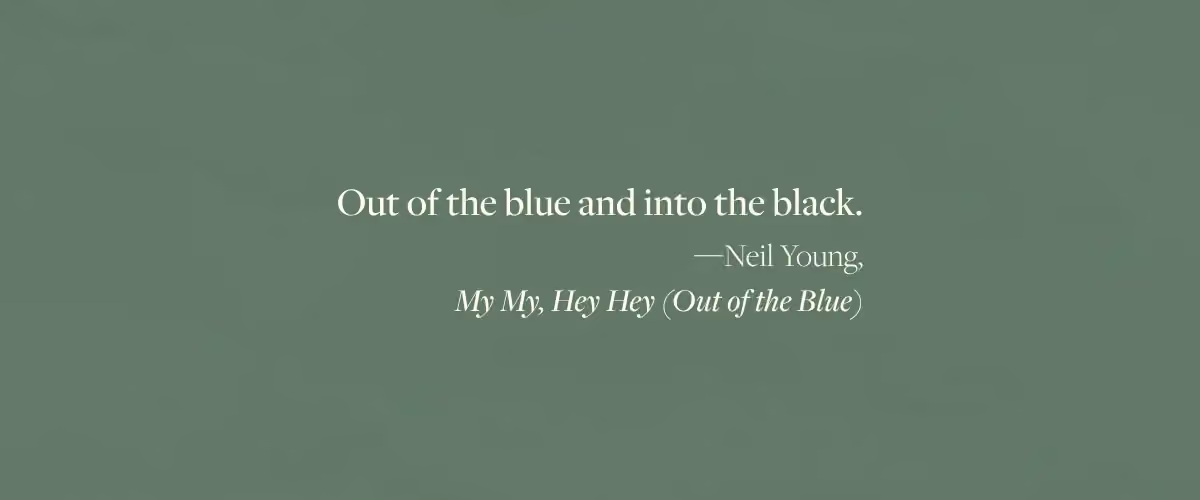
A dictionary of quotations
An obvious place, but a well-indexed and comprehensive selection, such as The Oxford Dictionary of Modern Quotations, is a much easier and more reliable source of epigraphs than buggy ad-filled websites with incorrectly attributed quotes. Most libraries have a dictionary or two of quotations.
Fiction
Can a quote from another novel help frame yours? Generally, if the book is from a different historical period or genre, then yes. Quoting from another contemporary author in the same genre will not only require permission and a fee (see note on fees below) but also runs the risk of looking more like a blurb...
Non-fiction
Before a work of prose fiction, a non-fiction epigraph—from one of your research texts, a memoir, or a general book on the themes and subject of your story—can lend a note of authenticity to your invented world.
Not to mention advertising slogans, documentary quotes, signs, dictionary definitions...
A note of caution on copyright restrictions
One very important practical consideration is that if your epigraph is not in the public domain (out of copyright), you will have to pay the copyright holder to quote it in your book.
In the U.K., copyright restrictions last for the author’s lifetime plus 70 years. In the U.S., works published before 1926 are generally in the public domain. So from Ancient Greece to Emily Dickinson, it’s not a bad treasure trove to choose from!
As mentioned, beware particularly of songs, because the ultimate rights holders may be very commercially minded record labels, rather than generous like-minded fellow artists, and you will have to weigh up the cost of every word you quote against the impact they will actually have on the reader.
I’m a big fan of the double epigraph, and once used a quote from Virginia Woolf and a song lyric from the Yeah Yeah Yeahs’ track. But perhaps something to mention is that the writer is responsible for tracking down permissions, ensuring correct copyright attribution, and paying any usage fees! And using song lyrics tends to be much more expensive than book quotes.
—Tara Conklin
But as we have seen, be it fiction, non-fiction, speeches, or lyrics, when an epigraph is judiciously and affordably chosen, all of these can inspire us to write the stories of our heart or help us frame them after they’re written.
Through courses, one-to-one coaching with bestselling authors and Big Five editors, and partnerships with leading literary agencies, we guide writers along a proven pathway from first idea to a finished, submission-ready novel.
.avif)