As the nights grow longer and colder, and another group of Traitors meets in a turret at midnight, let’s take a look at the tropes — the images, themes, and archetypes — that haunt Gothic fiction in all its subgenres.
The Novelry editor Francine Toon, author of the Sunday Times bestselling Gothic novel Pine, has created this extra-special guide to the motifs to use or lose in your novel, from the difference between horror and terror to the ever-present haunted house. Some Gothic tropes are evergreen; others feel well past their prime. Which should you keep, and which should you exorcise from your manuscript?
Francine’s haunted traffic-light system will guide you. Sharpen your quill, gather your manuscripts, and jump in your driverless carriage to the nearest cobwebbed library. Let’s start with Gothic elements that get the green light.
Ghostly green light: tropes to go to town on
Mystery and atmosphere
As a Gothic fiction writer, one of your main objectives is to play around with the sense of The Unknown. What’s around that dimly lit, crumbling corner? What’s that strange sound that can be heard at midnight? Readers of the Gothic desire a central mystery that pulls them through the narrative, but they also want to inhabit a world that feels mysterious more generally. A sense of The Unknown can also be created with a setting that drips with atmosphere. When it comes to creating your atmosphere, description and voice are your friends.
Suggested threat (terror over horror)
The horror genre is a world of gore, revulsion, and jump scares — in other words, a reaction to what is seen. Gothic fiction, on the other hand, concerns itself with the suggestion of something looming in the darkness (whether real or metaphorical) and playing on characters’ deepest fears: a sense of threat that is mysterious, rather than fully perceived. In broad brushstrokes, a character in a horror novel feels shock, and a character in a Gothic novel feels anxiety (though genre lines are frequently blurred, for the sake of a good story).
“The difference between Terror and Horror is the difference between awful apprehension and sickening realization: between the smell of death and stumbling against a corpse.”
— Devendra Varma, The Gothic Flame (1957)
This distinction between horror and terror was first characterized by the eighteenth-century pioneer of the Gothic novel, Ann Radcliffe, in her posthumous essay “On the Supernatural in Poetry.” As a Gothic fiction writer, you want to dance in the shadows of what is seen and unseen, known and unknown. This is why a character’s psychology and imagination often play a strong part in the narrative.
A disturbed status quo: the physical and mental
When thinking about setting and character, Gothic fiction is the domain of the turbulent and fractured, the decaying and tempestuous. Whether you’re writing about the weather, architecture, or the characters’ very psyches, things are the opposite of calm. They’re downright disturbed. Ask yourself, what is happening externally and internally (i.e., within the minds of your characters) that is causing this disturbance?
What is hidden and what is revealed
Building on the idea of The Unknown is the idea of The Hidden in Gothic fiction. This can take the form of hidden objects that reveal themselves to the main character: an old key, a buried map, a secret door, or an underground passage, for example.
Gothic fiction also deals in what is hidden psychologically and culturally. Repressed desires, concealed grief, buried trauma, and inner shame are all well-loved emotions of the genre. On a broader thematic level, a Gothic novel might explore hidden histories: how a community or family processes violent events in the past, for example.
Sometimes it’s an unexpected inheritance from a mysterious benefactor or a letter appearing from an old acquaintance that kick-starts a Gothic novel’s inciting incident.
Other times, a Gothic novel explores something not just hidden but forbidden. A main character’s curiosity to find out a buried secret or esoteric, dangerous knowledge is what propels them forward in the story. In this pursuit, they might cross moral boundaries or transgress societal codes.
“As a Gothic fiction writer, you want to dance in the shadows of what is seen and unseen, known and unknown. This is why a character’s psychology and imagination often play a strong part in the narrative.”
— Francine Toon
Science versus nature
On the subject of crossing boundaries, hubris shows itself time and time again in Gothic fiction, often when exploring the theme of science versus nature. Experiments that play with ethical boundaries, the cosmic order, or laws of nature (such as creating unnatural life or cheating death) come with a cost, resulting in an inevitable downfall. Old gods and superstitions are contrasted with the monstrosities of science, playing on the era’s societal anxieties. This trope is ripe for reinvention and would be nothing without Mary Shelley’s Frankenstein. See also “Birds, beasts, and monsters,” below.
Haunted by the past
Gothic characters might be repressing the past, but they inevitably cannot help but be haunted by it. This might be on a psychological level — memories bubbling to the surface — or they might take the form of a ghostly visitation.
A word of caution: in Gothic fiction, ghosts and ghouls are usually easier to write than revenants, zombies, or reanimated corpses, which often take us stumbling and groaning into the lurid realm of horror. (However, a chilling tale of a revenant can be much more effective than seeing one on the page.) See also “Birds, beasts, and monsters,” below.
A sure-fire way to create a sense of creepiness is by showing history repeating itself in an unexpected way. This could be a family curse, such as in Edgar Allan Poe’s “The Fall of the House of Usher,” or a main character unwittingly emulating a tragic figure from the past, as in Daphne du Maurier’s Rebecca. Note: this trope can overlap with that of the doppelgänger, explored below.
“Gothic characters might be repressing the past, but they inevitably cannot help but be haunted by it.”
— Francine Toon
Setting as character
A strong, atmospheric sense of place is an absolute must for Gothic tropes. Contemporary novels can have fun reimagining settings that are mainstays of the genre. There are plenty to choose from!
You could go for something grand, such as a castle or a mansion with a tower or a dungeon. Institutions are also popular, such as churches (and their graveyards), boarding schools, universities, hospitals, and, of course, mortuaries. Libraries are always a safe bet, whatever guise they come in. As for somewhere remote, think of forests, moorland, marshland, and bayous. If you want a bit of creepy razzmatazz, you could choose a traveling circus, spooky old theater, or abandoned cinema. Older cities with dark histories and a sense of decaying, romantic architecture (think spires, stained glass, cobbled streets, and winding alleys) can also be perfect for your Gothic setting.
Weather is another tool at your disposal when it comes to creating atmosphere. Often, the climate will mirror your characters’ turbulent emotions (pathetic fallacy). Wuthering Heights is a classic example. While you can go all out with rain, fog, thunder, and blizzards, do avoid anything that sounds like that most clichéd of first lines: “It was a dark and stormy night...”!
Acrid amber light: tropes to use with caution
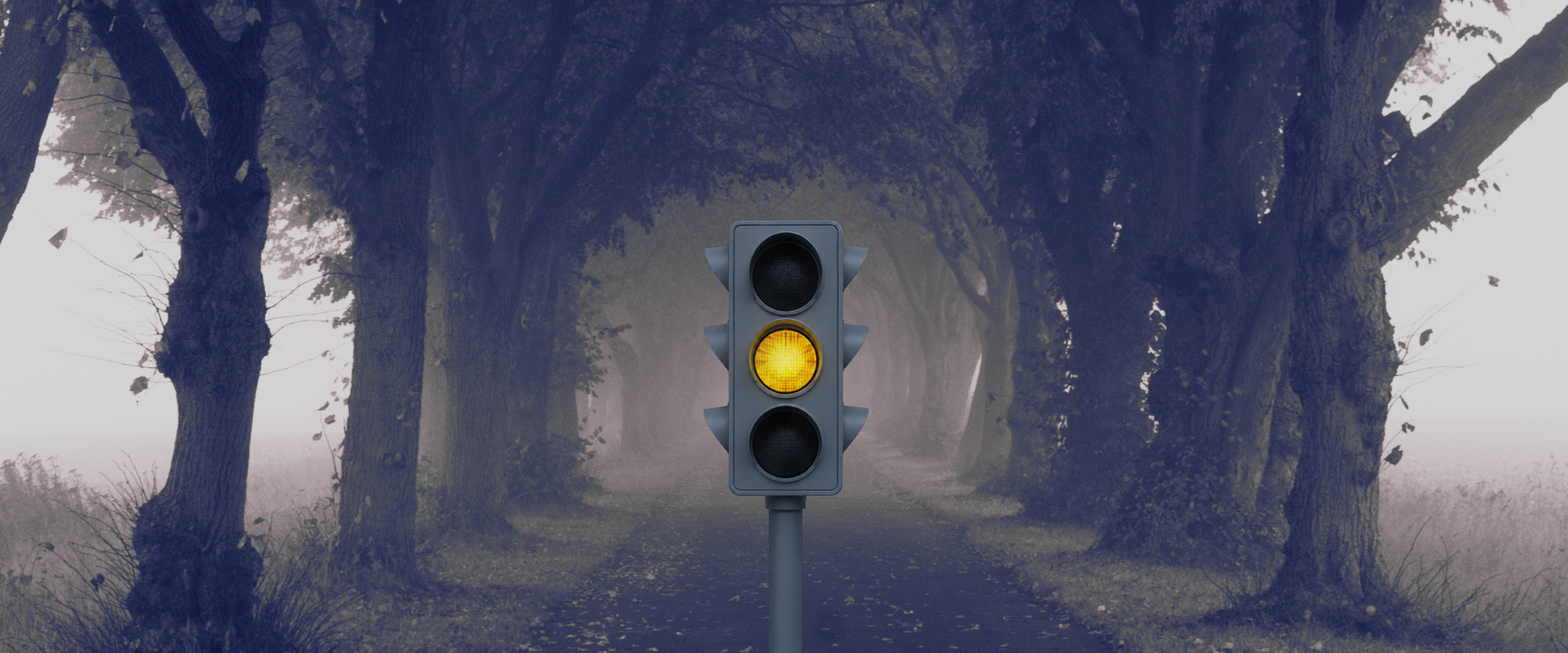
Mind control: hypnosis, trances, possession, insanity, psychic powers
When a character is controlled through hypnotism, trance, possession, or similar jiggery-pokery, these scenes can risk feeling weak. This is because all the conflict is happening internally, within a character’s mind, rather than through external stage management. The character also becomes, essentially, passive, which is a trait best avoided. Therefore, while a possessed person can be a powerful image in film (which often has the added advantage of a soundtrack), it is much harder to create truly engaging scenes on the page. This can also be applied to exorcism scenes.
“Don’t you know that I am no lunatic in a mad fit, but a sane man fighting for his soul? Oh, hear me! Hear me! Let me go! Let me go! Let me go!”
— Bram Stoker, Dracula
So says Renfield in Bram Stoker’s Dracula. Some 130 years later, it is hard to pull off a character whose mind has been taken by insanity without finding yourself in the realm of cliché or melodrama, given this is such a well-used image in Gothic fiction. See also “Disability, deformity, and mental illness in antagonists,” below.
On the other side of the coin, characters with psychic or telekinetic powers can be a little tricky to write too. It can be done (and very successfully, in the case of Stephen King), but it is hard when the central action and momentum come from something invisible.
Imaginary friends and invisibility
Following on from invisible powers, powers of invisibility (slightly different), invisible people, and imaginary friends are also to be used carefully. When a crucial element of the story is invisible — such as a ghost at a séance — it risks feeling weak or hard for the reader to picture without clever use of stage management, subtext, and atmosphere.
Note: while there could be a whole blog post dedicated purely to “ghost clichés,” the ending “his friend was imaginary all along” is on par with the ghost story that ends “Why, there hasn’t been a person of that description here for 25 years!”
Authoritative antagonists
I’m talking about your Nutty Professors and your Unhinged Intellectuals. Your Sinister Ministers and your Nefarious Nuns. Your Abnormal Aristocrats and your Demonic Doctors. From Dracula and Victor Frankenstein to Lord Summerisle, Gothic fiction loves an authority figure, often in the form of an antagonist, but sometimes as a tragic or eccentric protagonist. Is it even Gothic fiction if you don’t have a rich person with a dark secret? If you want to use this trope, think about a fresh twist to keep your characters from feeling stale or clichéd.
Snarky staff
Domestic servants (such as maids, governesses, butlers, housekeepers, and groundskeepers) and their counterparts (such as lab assistants and janitors) come in various Gothic guises.
Female servants can often be superstitious or even psychic, as well as gossipy storytellers. They can also occupy a mothering role, for better or for worse!
Servants in general will be familiar with the history of a stately home or noble family. In this way, they can be used as valuable sources of information for a main character, often occupying a liminal role between “inside” and “outside” a country estate or mansion, and even the living and the dead. They can be very knowing — tread carefully with characterization here, to avoid info dumps!
Another type of servant we encounter in Gothic fiction is full of sarcasm and derision, often using masked insults. This can be humorous or intimidating, depending on the character.
Whether clever and sarcastic, silent and brutish, or strangely prophetic, servants have the power to unnerve. Familiarize yourself with characters such as Rebecca’s Mrs. Danvers, Wuthering Heights’s Joseph, Bessie Lee in Jane Eyre, Bianca in The Castle of Otranto, and even the horror movie stock character Igor, while creating your own.
“From Dracula and Victor Frankenstein to Lord Summerisle, Gothic fiction loves an authority figure, often in the form of an antagonist, but sometimes as a tragic or eccentric protagonist.”
— Francine Toon
Magic, ghosts, and curses
If you invite at least one of this beloved trio into your novel, make sure you know their boundaries and “logic” within the context of the story. Don’t make magic systems too complicated or reliant on backstory. Setting limited powers for a character, including the demonic or ghostly kind, can be creatively challenging, but your novel will be all the better for it. There is a reason why superheroes specialize in one particular skill: it’s boring to read about characters who are all-knowing and powerful.
Faustian bargains
Deals with the Devil and regretting what you wished for are not quite the same as curses (above), but the simplest are usually the most effective. Take a look at The Picture of Dorian Gray, The Monk, and Melmoth the Wanderer for inspiration and think about how you could introduce something fresh.
Changelings, doppelgängers, and twins
These character-doubles can up the sense of uncanniness in your novel, but make sure the reader knows whether it’s coincidental or supernatural by the end of the book. Be wary of making two unrelated or distantly related characters look “exactly” like each other, if there isn’t something paranormal at play. In real life, even identical twins can be told apart by those close to them.
On the other end of the spectrum, be wary of characters who return, sometimes disguised, and go unrecognized among friends and family. “He was my brother all along!” is a twist that often stretches belief or feels clichéd. (See “Incest as plot twist,” below.)
While it’s best to avoid mental illness as the origin story for your antagonist (see below), another form of the doppelgänger is the split self, such as in Robert Louis Stevenson’s The Strange Case of Dr. Jekyll and Mr. Hyde.
“Be wary of making two unrelated or distantly related characters look ‘exactly’ like each other, if there isn’t something paranormal at play.”
— Francine Toon
Burn it to the ground!
Gothic fiction is rife with arsonists, such as Bertha Mason in Jane Eyre, Merricat Blackwood in We Have Always Lived in the Castle, Louis de Pointe du Lac in Interview with the Vampire, and Noemí in Mexican Gothic. Make sure you don’t use the house-in-flames trope purely for dramatic purposes (especially if you are struggling to think of an appropriate ending for your novel!). Take a look at how other writers have used the idea and think about how to make your scene feel original.
Damn it, Janet! The naïve interloper
Your average Gothic mansion will usually be the domain of an unsuspecting visitor. Think Brad and Janet in The Rocky Horror Picture Show, Jane in Jane Eyre, Eleanor Vance in The Haunting of Hill House, Antonia in The Monk, and Jonathan Harker in Dracula. Female protagonists are traditionally young and fragile, a trope that might be worth subverting for a contemporary readership.
Sex
Just as in any other genre, sex scenes can be particularly difficult to write. Our blog post on how to write intimacy may come in handy, as well as considering how your scene fits the overall atmosphere and subgenre of your novel (for example, Gothic romance versus Gothic horror).
Queerness has a long tradition in Gothic fiction, dating back to Joseph Sheridan Le Fanu’s vampire novella Carmilla and Richard Marsh’s The Beetle. It is continually being reinvented for new readerships, so it is worth diving into the work of some exciting contemporary writers, such as Carmen Maria Machado, T Kira Madden, Anbara Salam, Heather Parry, and Leon Craig, if you are writing queer characters in your novel.
On a darker note, sexual assault and coercion have long been motifs in Gothic fiction, as a manifestation of threat through male aggression. Vaults and chambers are used to confine women against their will, while figures such as the blood-sucking vampire can be darkly eroticized. Modern Gothic novels have evolved to reflect a contemporary readership that values sensitivity and nuance around this trope, with narratives that center the victim. Sexual assault should never be used gratuitously, in any genre, for a cheaply dramatic scene. See also “Incest as plot twist,” below.
Strong emotions
Obsession! Lust! Terror! These are the heightened emotions of the Gothic. Use them cautiously to avoid melodrama and steer clear of your manuscript feeling like it’s emotionally turned up to eleven at all times. It helps to familiarize yourself with contemporary Gothic writers, such as Sarah Perry, Laura Purcell, Andrew Michael Hurley, and Silvia Moreno-Garcia, and take notes on how they depict emotion successfully.
Birds, beasts, and monsters
“Quoth the Raven, ‘Nevermore.’”
— Edgar Allan Poe, ‘The Raven’
Nevermore shall you use animal tropes unwisely! Whether you’re writing about a Lovecraftian sea monster or a humble fly, think about what these creatures symbolize for the story overall and what themes they can bring to the fore. How do your characters feel about these other beings?
Arthur Conan Doyle’s The Hound of the Baskervilles is an example of how the mere threat of a beast can create the dramatic tension needed for Gothic literature. Avoid animals that are too obviously symbolic, such as a black cat or an ominous crow, unless it is part of your characters’ own superstitions and beliefs.
When it comes to monsters and demonic creatures, familiarize yourself with novels such as Frankenstein and the works of H.P. Lovecraft. Often monsters are deeply connected to the theme of science versus nature, above.
Dreams
Like omens, unsettling dreams plague the protagonists of Gothic fiction. Keep any dream sequences short and resist the temptation to throw in every theme and symbol of your novel, as this can often feel heavy-handed or self-indulgent, like the authorial equivalent of a twenty-minute jazz solo.
Masque of the red light: tropes to bury as relics of the past
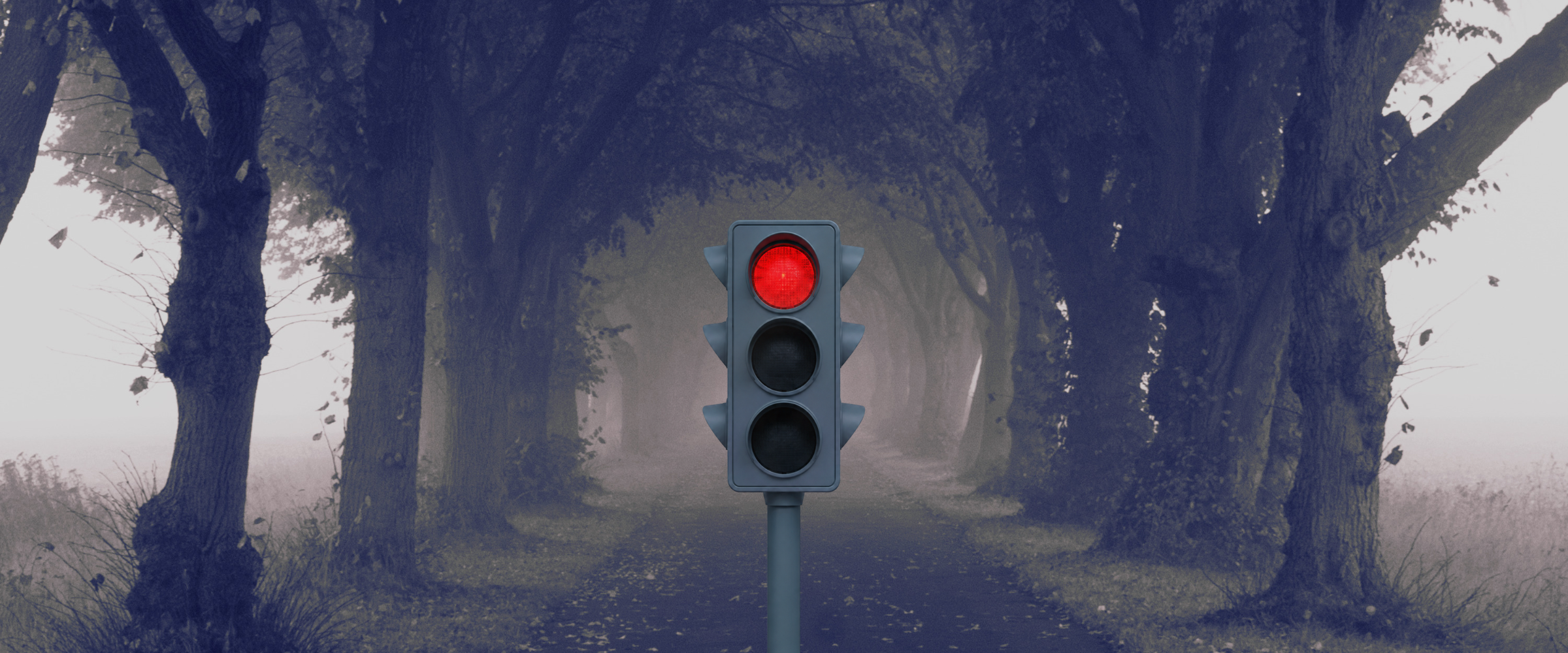
Disability, deformity, and mental illness in antagonists
Sadly, Victorian society had problematic attitudes toward disability and physical deformity. In Gothic fiction, this would manifest as antagonists or villains coded as “other” or “immoral” through physiological imperfections. This legacy can still be seen in popular culture today: Captain Hook, for example, or Scar in The Lion King. It goes without saying that there is no place for this trope in modern literature, unless it is very cleverly subverted, sensitively, by the right author.
On this note, the use of the “insanity” or “mental illness” trope mentioned above should be carefully handled. Try to avoid a “mental illness” plot twist, as this doesn’t match modern-day sensibilities. I’m looking at you, mad scientists.
The hysterical woman
No, not a woman who is hilariously witty, but the Victorian idea of female “hysteria,” a word that originates from the Greek for womb and is tied to the pseudoscientific belief that women’s “excessive” emotions were a mental illness. While this could be an interesting trope to subvert or play around with in the modern day (see Wide Sargasso Sea), the original version can stay in the nineteenth century.
“Try to avoid a ‘mental illness’ plot twist, as this doesn’t match modern-day sensibilities. I’m looking at you, mad scientists.”
— Francine Toon
Gothic Orientalism and foreign antagonists
Perhaps unsurprisingly in the time of the British Empire, Gothic villains were often coded with “otherness” through a sinister exoticism. Again, let’s leave this trope in the past.
Certain cursed objects, such as the gem in Wilkie Collins’s The Moonstone, are often of foreign provenance. In the right hands, this trope could arguably be subverted, perhaps to say something about imperialism, but in its original form, we suggest banishment.
Incest as plot twist
Revealing that two family members are sleeping together can be intended as a shocking twist, but it’s one that feels pretty hackneyed these days and, well, just icky. Less “chill down your spine” and more “sick to your stomach.”
The talking animal
While this may be the realm of the witch’s familiar, a talking animal very rarely works in this genre, unless writing for children or crossing over into Gothic fantasy.
Scooby-Doo showdown
An ending in which the nefarious antagonist is dramatically revealed, or the antagonist reveals his grand masterplan before attempting to murder the main characters. This kind of scene, with its forced exposition, can feel too melodramatic, a bit like the Scooby-Doo cartoon ending: “I would have gotten away with it too, if it weren’t for you meddling kids!”
The Novelry offers expert guidance, one-to-one support from bestselling authors and Big Five editors, alongside a vibrant community — taking writers from first idea to a finished, submission-ready novel. Join the fiction writing school for novelists.