.webp)
Tips for Planning a DIY Writing Retreat
.avif)






There’s something glamorous about the idea of going on a retreat.
Perhaps, like us, you’ve looked up “writing retreats,” curious to try one; a quick scroll online fills the screen — and your mind — with words like “country cottages,” “gorgeous views,” “quiet nooks,” “conversations with other writers,” even, and (this is most delicious after making meals for children and visitors for months on end), “homemade meals.” No wonder the idea promises a psychological reset.
But of course, retreats can be hard to balance with everything else in our lives.
Here, award-winning author Alice Kuipers — Head of Coaching at The Novelry and a seasoned retreatant — shares her best tips for getting the most out of a writing retreat, whether you’re going away or staying at home.
The Finished Novel Course
The complete writing journey. Follow a clear, proven path from first idea to a finished, publishing-ready novel.

Could you achieve your best writing in a retreat space?
Writing retreats have a long history: in the mid-nineteenth century, Henry David Thoreau slipped out of his life and stayed in a cabin where he wrote Walden. Virginia Woolf built a writing shed away from the house to write in — as did Dylan Thomas.
And artist spaces like the MacDowell Colony opened their doors in 1907, still offering a retreat today. They promise this: “When they arrive, artists find a kind of isolation hard to find in our wired world. There’s no phone. No fax. No friends. No family. It’s just a cabin in the snowy woods.”
It sounds glorious.
On a writing retreat, we can step away from the responsibilities and the interruptions of daily life to let our novels unfurl and become more than scattered notes on the page.
Balancing a writing retreat with “real life”
As I dive in further, tempted by a cliffside ocean-view hideaway for six nights or a library with a rose garden for a weekend, the costs and travel complexities make it seem impossible. To get away to write, I need to organize childcare, hand off work, add to my groaning to-do list, and then line up so many details that I get stuck.
The idea of a retreat is marvelous, but does it actually work? How long should I go for, and where? And at what stage of a book is it worth shutting out real life?
To answer these questions, I took a short retreat at a nearby hotel (one night, two days — keeping it simple so I could test how a longer retreat might work) and reached out to our team of writing coaches and writers at The Novelry for advice.
Read on to see if a writing retreat might be exactly what you need.
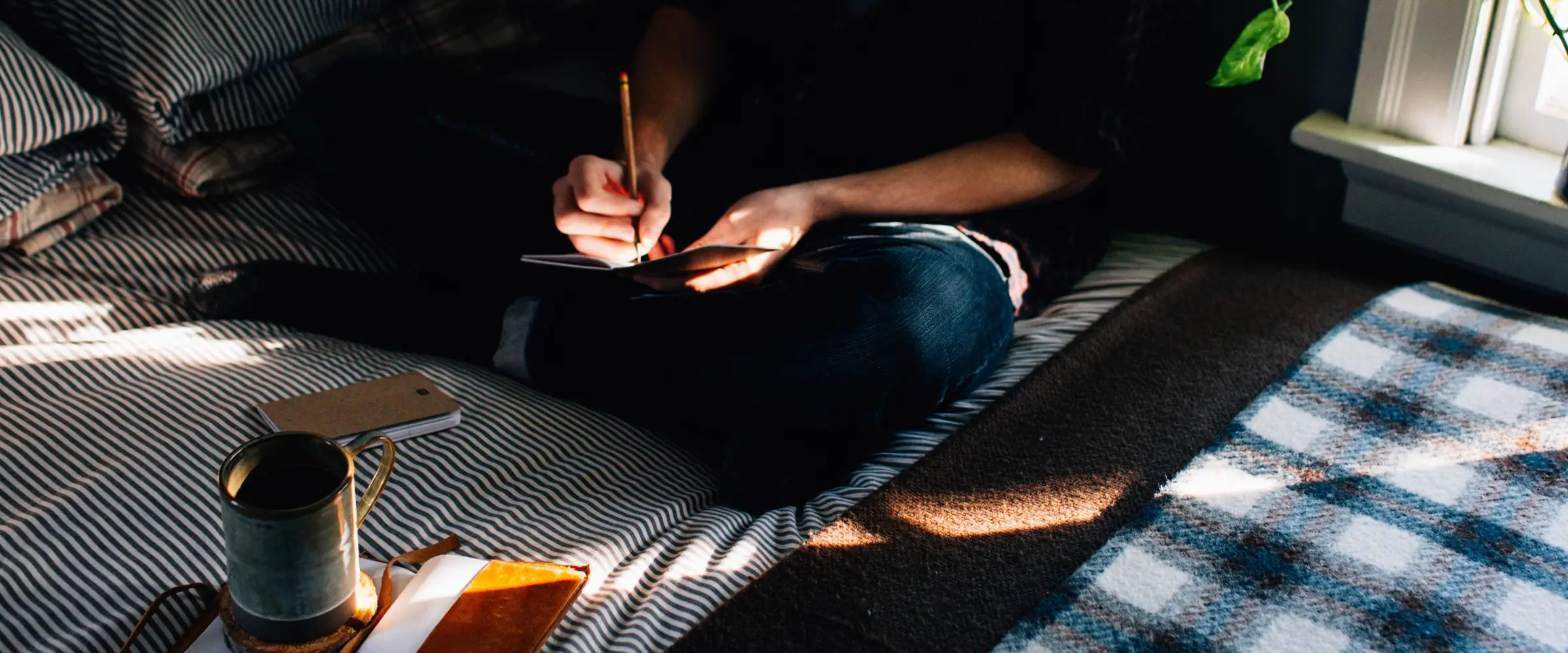
Tips for going away on a writing retreat
Stepping into a hotel room with a view over our local river gave me an immediate sense of calm. I set myself a clear goal for the short time away, and spent the first hour settling in and prepping.
1. Do your prep work ahead
Stephanie Soebbing, a bestselling quilting author and writer at The Novelry, who also runs retreats on cruise ships, suggests:
Do all your prep work ahead, so you can get right to work when you arrive... This could be spending time getting your outline or list of changes solid... Pick a reasonable amount of work to get done that is about one day more than you think you can accomplish. This helps you focus your prep, and sets you up with realistic expectations... I always get so much done, and return feeling recharged and ready to continue the productivity into my daily life.
— Stephanie Soebbing, The Novelry community
2. Set a clear goal for your time away
Writing coach and bestselling author Piers Torday says:
I’ve used retreats to think and start books, going to beautiful places with lots of long walks in between, quiet reading and note-taking, but also used them to crash deadlines, sealing myself in a dull remote cell like a monk where writing is the only interesting option... A retreat is always part of the process for me.
— Piers Torday, writing coach for The Novelry
Lou Abercrombie, a writer in The Novelry community, agrees:
I’ve been on several writing retreats. They definitely work for me as it helps me set a clear intent of what I want to achieve, plus having someone else cook and meeting other likeminded writers is nice.
— Lou Abercrombie, The Novelry community
.webp)
3. Leave everyday life behind
Every year, Emylia Hall, author of The Shell House Detectives series and writing coach at The Novelry, takes a week close to the ocean with another writer friend, stepping away from work and family life to a “place where the words just flow and flow.”
The joy of a retreat is the full immersion, and the way all the everyday time-sucks just disappear.
— Emylia Hall, writing coach for The Novelry
With a new idea brimming and the quiet of uninterrupted time, at first, my focus was to gather all the half-formed notes and notions I’d had recently to see what the idea might be. While I wasn’t ready to write yet, the hours before supper, with no one asking me what there is to eat, were unexpectedly productive.
After a quick supper in the hotel restaurant, I took a walk as the sun set by the river, mulling over my thoughts so far, and planning another hour or two of note-making before curling up with a book. I was already further ahead and clearer than I could have imagined in the busy day-to-day.
Already, I understood what writing coach and bestselling historical fiction author Heather Webb means when she says:
I do several retreats each year. That concentrated time of focus away from family life and just the demands of daily life is key. I don’t know how I wrote books before without them!
— Heather Webb, writing coach for The Novelry
Author and writing coach Urban Waite adds:
I wrote my first novel in a month while on a retreat at the Vermont Studio Center in December. I remember the temperature outside hitting -27° Fahrenheit/-32° Celsius at one point, and there being no need to go outside. I don’t know if it’s so much the retreat as simply having the voices of your characters and your own writing voice always at the forefront of your mind.
— Urban Waite, writing coach for The Novelry
After a peaceful couple of hours, where I actually started what might be the first page of my next book, then calling the kids to say goodnight, I finished my first day by reading. The calm of refueling with a great book without running “bedtime operations” was remarkably creative.
Ideas sparked and I got up to make more notes. I started to wonder if I might want to build a regular writing retreat into my life. Already, the fact that I’d return home the next day after a late checkout at noon felt too soon: I wanted to do this more!

Tips on how to prepare for a retreat, choosing the right time, and how long to go for
4. Take as many days as life allows
My less-than-24-hour experience wasn’t going to give me the answers I needed, so I turned to other writers for more insights. Bestselling fantasy author and writing coach at The Novelry Andrea Stewart says:
I go on a retreat at least once a year, sometimes focused on word count, sometimes on ideas and creativity, but getting out from under the mental load of everyday tasks allows me to fully immerse myself in the work. It’s a fantastic way to build momentum once the basics are down and you just need the time to flesh everything out.
— Andrea Stewart, writing coach for The Novelry
For writer Stephanie Soebbing, an ideal length of time is at least four days.
Five [days] is a luxury. Day one you’ll be getting there and setting up. Then two to three days of solid progress. The final day will be packing up and leaving. You probably won’t get much done. Also Thursday–Sunday is an easy enough time to get away from work/life, without burning through all your vacation.
— Stephanie Soebbing, The Novelry community

The more I asked my fellow writers about their own retreats, the longer the time windows grew, which opened me up to new ways of thinking about taking a longer retreat. Carol Williams, writer at The Novelry, said that she “organized a solo month-long writing retreat (research trip!) in Bayeux, the setting of my novel.”
In the morning I’d choose a character, a timeline, and a location from my book and immerse myself for the day, then write it up in the evening, regularly eating a bag of freshly cooked prawns from the fishmonger with my fingers to save doing any dishes.
— Carol Williams, The Novelry community
Carol Sanders, her writing buddy at The Novelry, says:
I took myself to our local beach with my notebook, computer, a store-bought cooked chicken, a six-pack of San Pellegrino, a pint of blackberries, and yogurt. The goal was to get three chapters revised and figure out some arcs of minor characters.
— Carol Sanders, The Novelry community
After a peaceful sleep in the quiet of my own hotel room, when I woke in the morning, I sipped coffee and made sure I didn’t turn to my email and my phone. Taking a break from both of those things led to another couple of hours of writing before I treated myself to a late breakfast and some more reading. My time away was already coming to an end, but I felt like I’d managed to cover a lot of writing ground with those short hours just by being away from the responsibilities of family life.
5. Look for opportunities such as house-sitting or pet-sitting
Author of three novels and writing coach Tara Conklin says:
Whenever I am really up against a deadline (self-imposed or otherwise), I must remove myself from my real life and surroundings. A DIY writing retreat of some sort — even if it’s just a long weekend cat-sitting for a friend — has made all the difference for me. I can get more done in three days of intensity than three weeks of trying to cram it in alongside laundry and kids and etc... etc...
— Tara Conklin, writing coach at The Novelry
Thoroughly delighted by my own brief retreat, I wondered for the last hour of it whether I might be able to fit in another night or two away in the next few months. Then I looked at the upcoming calendar and realized it would be a while before I could leave again.
Writing coach and bestselling author Gina Sorell had been finding it hard to get away from the responsibilities of parenting and work, so she made time for her first DIY retreat this year.
It was incredible. I got five hours of writing in before lunch, took lovely long walks, swam in the lake, and then got a few more hours of writing in before dinner and an evening of great conversation. I got so much writing done, and I still felt like I was getting a holiday!
— Gina Sorell, writing coach at The Novelry

Tips on taking a DIY writing retreat at home
Learning about the DIY retreats of other writers showed me how I might build them into my own schedule. Even an ordinary weekday can become a mini retreat at home: once the kids leave for school, I could block out a clear writing window before work and domestic tasks pull me back in.
5 “micro-retreat” ideas
- Shut off the internet and put away your phone for a while; letting work and family know you’re taking a day “off” is key. (And yes, I know I want my kids to be able to call me if they have an urgent need, so I fix my phone settings so only they can get through!)
- Clear the mental load the day before by putting all your to-dos on a list for “after,” then keep that list out of sight.
- Choose a space or place where you won’t be interrupted. That could be a quiet corner of your house or a local café.
- Think about the breaks you’ll take. Plan to go for a walk or take some time staring out the window instead of letting life tug you back.
- See if there’s an online option to “retreat with other writers at home” to help guide your day. Our writers get daily fast fixes for this with The Novelry’s Golden Hour sessions.
Should I go alone or with someone else?
The writers I asked had a variety of opinions on whether it was best to retreat alone or with others. Gemma Stewart, writer at The Novelry, advises:
I’ve done several trips with a writer friend, with the express purpose of reading each other’s work and writing. We each take different things from it. I get inspired by a new landscape, and want to be outside generally, exploring, discovering, for inspiration, but she literally wants to do real writing while we are there — which I find too difficult. I need my own comfortable space, and peace and quiet for that. We both get quite a lot out of talking through our ideas too, and it helps build excitement for your project.
— Gemma Stewart, The Novelry community
Another writer at The Novelry, Laura Callis, has a good work-from-nearby option:
My co-worker and I will write-in-place together for long sessions at the beginning of summer when we have a joint project due, and we call these our “retreats.” We take different parts, but it is really helpful, and it’s never at my house — it’s on the empty campus, or at her house, or in a library.
— Laura Callis, The Novelry community
Bestselling author and writing coach at The Novelry Bea Fitzgerald says:
There are so many things I love about writing retreats (especially when they actually make it out of the group chat...) but, for me, the best part is being given the time, space, and license to talk about your books — my most successful retreats aren’t those I’ve left with the largest word counts but those where I’ve muddled through problems with friends, realized aspects of world-building, or simply been enthused about the idea championed by those around me.
— Bea Fitzgerald, writing coach for The Novelry
In addition to doing a retreat with a friend, Emylia Hall also takes a solo retreat every autumn. A bestselling author several times over, she explains why it matters so much to her writing life.
Every autumn I head off on a solo writing retreat to Cornwall, staying in a cottage, just me and my book. I’ve been thinking of a new word for “retreat” as it suggests seclusion and withdrawal, and while there is definitely a bunch of that — my word count targets are always steep — when I go to Cornwall (the setting for my crime series), it’s also about getting out IN it.
It’s about filling up my cup — heart and soul — relinquishing responsibility and living purely by my own rhythms. And it’s about reveling in all the things that make this corner of the world so special to me, too. I go to all my favorite spots — coffee shops, restaurants, galleries, beaches — and my novel comes too, whether it’s my laptop beside my lunch plate, or turning over the plot in my head as I stomp the coast path.
— Emylia Hall, writing coach for The Novelry
.webp)
Finally, it was time for me to check out of my little writing retreat, and I happily gathered my notebook, my laptop, and the novel I’d finished reading. Even in that short time, I’d stepped fully into my writing life, and something glimmered inside — I was ready for the busy few months coming up, and I had the shiny shape of my own new book to hold me steadfast.
Emylia Hall sums up beautifully how a writing retreat feels for her:
My notebook is filled, chapters unfold, characters show me what they’re really made of, and my love for my work-in-progress is always stoked. Can one word hold all of that? Maybe. Instead of “retreat,” I’m going with “embrace.”
— Emylia Hall, writing coach for The Novelry
Embracing the place, embracing the work (including all the knotty bits), and embracing myself, too. There’s a poem I love by Tess Gallagher called The Hug, and in it she says “when you hug someone you want it to be a masterpiece of connection.” A masterpiece of connection is what I think a writing retreat — a writing embrace! — should be too.
*
The Novelry is the fiction writing school where bestselling authors and experienced publishing editors guide you every step of the way. Our program combines the standards of professional publishing with the warmth of a creative community. We’ve helped hundreds of authors finish their novels and land book deals. Ready to write yours?
The Big Idea
Our ultimate writing course for beginners.
For those writing fiction for the very first time.

.avif)
.avif)


Alice Kuipers
Writing Coach
Carnegie medal nominee and winner of the Grand Prix de Viarmes, author of YA, children’s fiction, and memoir, including Life on the Refrigerator Door, a New York Times Book for Teens.
.avif)
Related Articles
Tips for Planning a DIY Writing Retreat
%20(1).webp)
Dear Writer, This is Why You Need a Deadline